


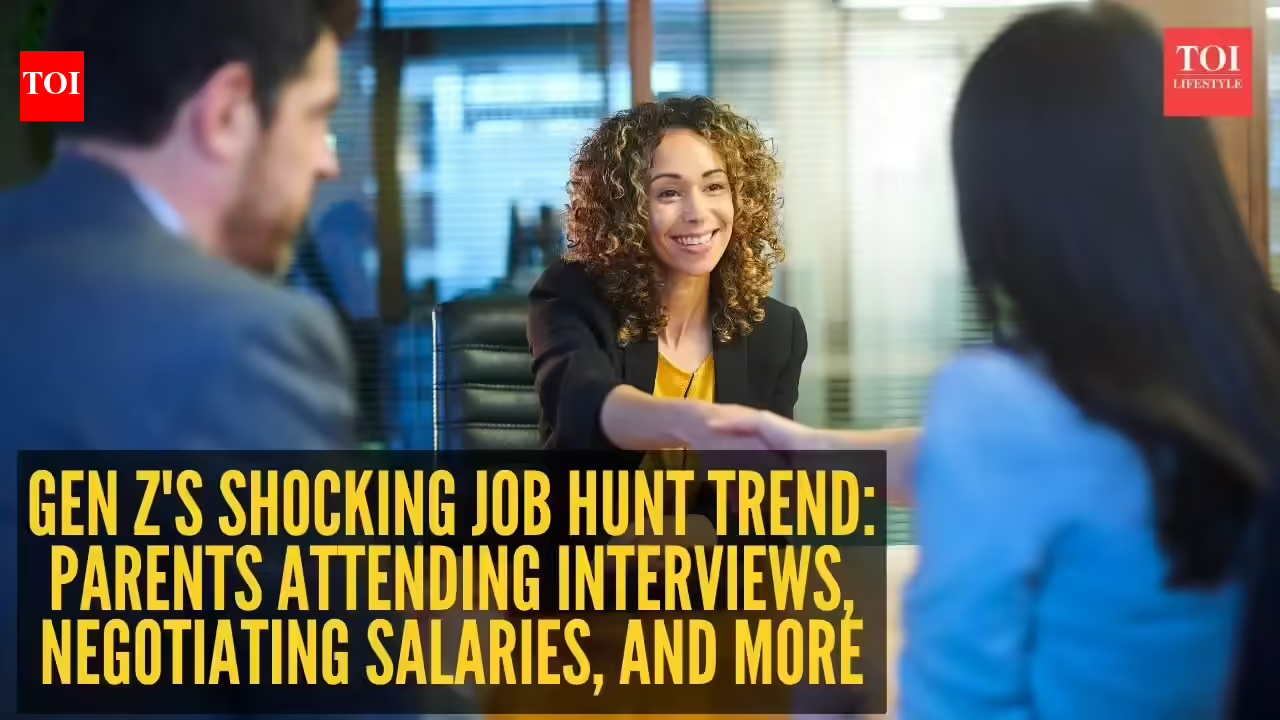
Imagine this: You’re a hiring manager sitting in a conference room, waiting for a promising 22-year-old candidate to walk in. The door opens, and in walks the applicant—followed closely by their mother. Mom doesn’t just sit in the lobby; she pulls up a chair, prepares a notebook, and starts negotiating the salary.It sounds like a rejected script for a cringey sitcom, but in 2026, this is becoming the “new normal.” According to data released in late 2025, nearly 77% of Gen Z job seekers have involved their parents in the hiring process. We aren’t just talking about a quick resume proofread over dinner; we’re talking about full-on tag-team recruitment.
The Numbers: When “Bring Your Parent to Work Day” Starts Early
Parents aren’t just cheering from the sidelines anymore; they are on the field, wearing the jersey, and occasionally calling the plays. The statistics from recent studies are genuinely eye-opening:Parents sat in on the actual interview- 40%Parents negotiated salary and perks- 27%Parents submitted the job application- 63%Parents wrote the follow-up emails- 54%Parents are listed as professional references- 75%Even more surprising? Once the job is landed, about 80% of these young professionals admit their parents have spoken directly to their managers about promotions, office conflicts, or workload issues.
Why is This Happening? (It’s Not Just “Laziness”)
It’s easy to roll your eyes and blame “helicopter parenting,” but the reality is more nuanced. Gen Z entered a professional world that was fundamentally broken by the pandemic.The Networking Gap: While a Gen Xer might have 40 solid professional connections, the average Gen Zer has about 16. Remote classes and Zoom internships killed those “watercooler moments” where you learn how to actually speak to a boss.The Isolation Factor: For a generation that spent formative years behind a screen, the prospect of a high-stakes, in-person negotiation feels like a foreign language. Parents, in this context, act as “career translators.”Cultural Norms: Especially in places like New Delhi, the concept of a “joint family” means parents are involved in almost every major life milestone. As the global job market gets tougher, that family-first mentality is bleeding into the corporate world.
The Double-Edged Sword: Teamwork or Red Flag?
Is this savvy survival or a total disaster for career growth?“When a dad starts negotiating his daughter’s signing bonus, I don’t see a supportive parent,” one NYC recruiter whispered. “I see an employee who won’t be able to handle a difficult client call on her own.”The risk is stunted development. If you never have the “sweaty-palms” conversation about your salary, you never build the muscle memory required for leadership. On the flip side, some modern startups—especially those following the collaborative “family” models seen at companies like Google—are less bothered. If the candidate delivers top-tier work, some bosses don’t care who helped them get through the door.
A Smarter Play: Use a “Bot,” Not a Parent
If you’re feeling underprepared, there are ways to get support without looking like you need a babysitter.Strategy vs. Spotlight: Use your parents for the “behind-the-scenes” stuff. Role-play the tough questions at the kitchen table, but leave them there when you head to the office.The AI Wingman: About 1 in 5 Gen Zers are now using ChatGPT or similar tools to simulate interviews. An AI won’t get embarrassed when you fumble an answer, and it can give you instant, judgment-free feedback on your tone and confidence.The Silent Scout: Treat your parents as “silent partners.” Let them help you find leads through their networks, but ensure the first point of contact is always you.
Looking Toward 2030
By 2030, Gen Z will make up 30% of the global workforce. We are currently in a messy transition phase where the “cord” is being stretched to its limit. While having a parental backup might help you land that first role, the data shows that long-term retention lags for those who can’t stand on their own two feet.The bottom line? In a 2026 boardroom, the most impressive thing a young candidate can bring isn’t a famous reference or a hovering parent—it’s the quiet confidence of someone who is ready to fly solo.