


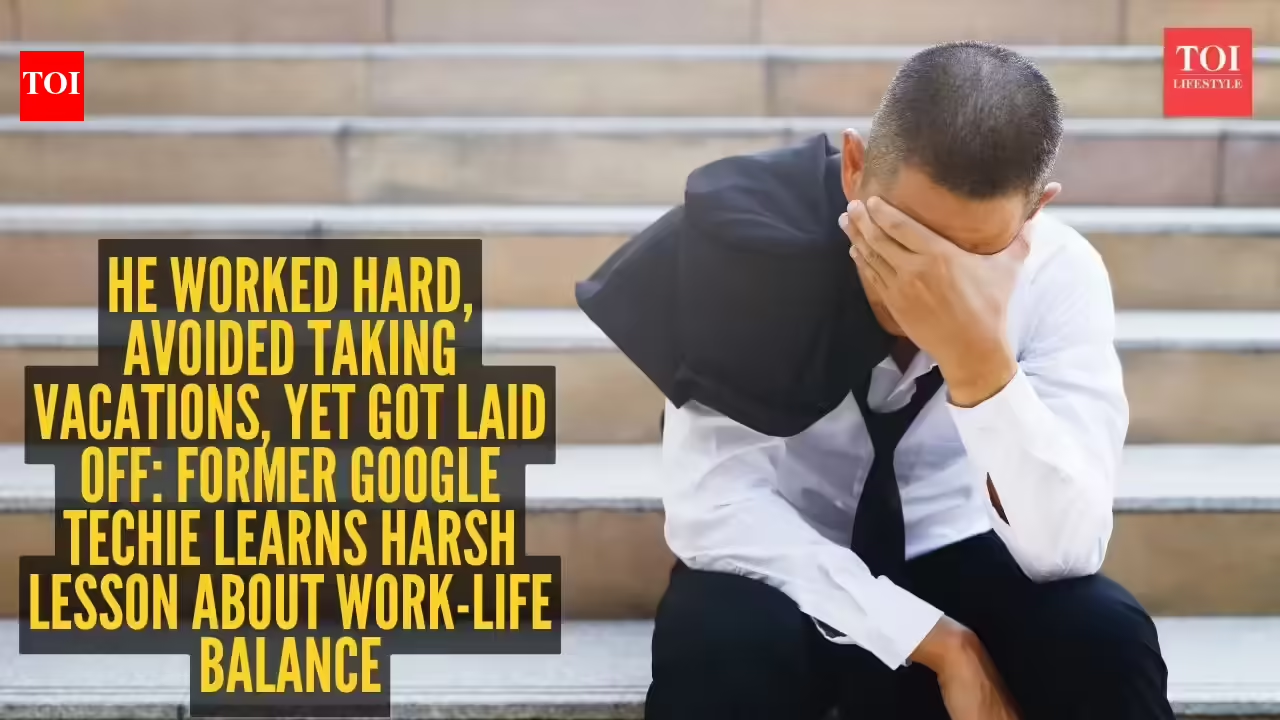
For a long time, many professionals have lived by a quiet belief: If you work hard enough, you’ll eventually earn stability. Late nights, skipped weekends, postponed holidays, and constant “hustle” were all seen as the necessary price to pay for a secure career and a comfortable future. But a recent, honest account from a former Google engineer is making people stop and question that assumption. It’s not just about losing a job; it’s about how losing a job can quietly shatter the way you see work, effort, and the very idea of “security.”Jason Zhang, a software engineer based in the US, described how his entire life used to orbit around his job in a social media post. His days were filled with long hours, frequent weekend work, and a habit of always putting professional responsibilities ahead of personal plans. “I have always prioritised work in my life and honestly still do,” he wrote, making it clear that this isn’t a sudden rejection of ambition. Instead, it reads like someone trying to process what happened, to make sense of a narrative that once felt bulletproof.For years, he followed a simple, almost comforting formula in his head: more effort would equal more security. He delayed vacations, pushed off personal projects, and told himself that if he just kept working harder, “it would all be worth it.” The logic seemed solid—if you’re giving your best, you’re less likely to be dispensable. But then, unexpectedly, he found himself laid off. That’s when the realisation hit, slowly and painfully: “None of it really mattered.”Despite the late nights, the extra hours, the loyalty to the company, he was still part of a wave of layoffs. He described the moment not as a simple career change, but almost like a personal loss. Losing his job felt like losing everything he had spent years working toward at once. “When I lost what felt like everything I’ve worked for overnight, it really made me want to start building something for myself that no one can take away,” he wrote. That line went beyond his own story; it pointed to a larger truth many skilled, hard‑working professionals now recognise.Zhang also reflected on the sacrifices he made over the years—putting off trips, relationships, hobbies, and even his own health—for the sake of career stability. He admitted that he convinced himself that working harder would protect him, but he saw the same thing happen to other talented colleagues. It got a lot of people online talking, agreeing that stability can’t be bought only with effort anymore.The post caught fire across social media, with people sharing their own experiences of layoffs, burnout, and quiet regret. Some reminded others that health and time with family matter more than any job title. One comment summed it up: “We’re always taught to work hard for someone else, but never for ourselves. Prioritise life and health; work will move on without you, but your life won’t.”Others spoke about the need to be more strategic—finding side projects, staying open to new opportunities, and not tying your entire identity to one company. And in the middle of it all, Zhang left readers with a simple, uncomfortable question: “If you knew you’d lose your job tomorrow, what would you do differently?” It’s a quiet nudge to rethink not just what we do, but why we keep doing it.
He worked hard, avoided taking vacations, yet got laid off: Former Google techie learns harsh lesson about work-life balance |
 Mumbai Metro crosses 100km, overtakes Bengaluru to become India’s second-largest network after Delhi-NCR