

NEW DELHI: As the people of the “tea state” prepare to elect a new government on April 9, “Asomiya jatiyotabad” (Assamese nationalism) remains a core issue for Assam. For decades, the state has wrestled with anxieties over protecting its cultural and demographic identity, particularly from the threat of “outsiders”, mainly illegal migrants.As campaigning concluded, what played out across towns, villages and remote corners of the state was not just a visible political contest, but also a quieter, deeper churn around identity politics.The 2026 assembly elections, therefore, are not just about who forms the next government, they are a high-stakes referendum on identity, power and the future direction of Assam’s politics.
Decline of regional parties?
One of the most striking shifts in Assam’s political landscape has been the declining autonomy of regional parties. Historically, Assam’s politics was shaped by strong regional movements that emerged from the demand to protect Assamese identity. The Assam Movement led to the formation of political platforms like the Asom Gana Parishad, which once dominated the state’s political narrative. However, over the years, the relevance of these regional forces has come under question.Political analysts argue that the “hijacking” of Asomiya Jatiyotabad by national parties, combined with their superior organisational and financial resources has pushed regional parties into alliances for survival.Columnist Brojen Deka noted that identity politics has long been central to Assam’s elections. “Protection of culture, language, and identity has always been a concern for the Assamese people. And this has been used by different political dispensations in different manners,” he told PTI.He pointed out that the BJP’s rise to power in 2016 was built on the same plank.“If you see the BJP’s sweeping entry into power in 2016, the poll plank was ‘jati, mati, bheti’ (community, land, home), a direct reference to safeguarding the indigenous identity. And in 2026 elections also, it is still promising to act against illegal Bangladeshis from the state,” he added.
The AGP’s shift in political journey
The journey of the Asom Gana Parishad reflects the broader challenges faced by the regional parties. The AGP which once positioned itself as the primary defender of Assamese identity and led governments in 1985 and 1996. Today, however finds itself as a junior ally within the BJP-led alliance.The party’s roots lie in the Assam agitation (1979–1985), a mass movement led by the All Assam Students’ Union and supported by the All Assam Gana Sangram Parishad. The agitation focused on the demand to identify and deport “illegal immigrants”, and saw widespread protests, strikes and political mobilisation across the state.The movement culminated in the signing of the Assam Accord on August 15, 1985, after then Prime Minister Rajiv Gandhi held talks with its leaders. The Accord laid down a framework for detecting and deporting illegal migrants, while also promising political and economic safeguards for the Assamese people.Soon after, leaders of the movement transitioned into electoral politics. In October 1985, at a convention in Golaghat, several regional groups, including the Asom Jatiyatabadi Dal and Purbanchaliya Loka Parishad, came together to form the Asom Gana Parishad.Riding on the momentum of the Assam Accord and strong regional sentiment, the AGP contested the 1985 Assembly elections, focusing on protecting Assamese identity, economic development and greater state autonomy. The party fielded 107 candidates and won 64 seats, forming the first regional government in Assam. It returned to power again in 1996 on a similar plank.However, over the years, the party’s influence has waned.Retired academic Nava Kumar Mahanta highlighted the shift, stating that the party now contests far fewer seats and has undergone significant changes in its candidate profile.“What is more worrying now is that this year, 13 out of its 26 candidates are Muslims and many of them Bengali-speaking ones, a community which the AGP had earlier viewed with suspicion as being illegal migrants,” he said.He added that while the AGP had a secular outlook, it had historically maintained distance from Bengali-speaking Muslims, a stance that appears to have evolved in recent years.
The rise of ‘Brand Himanta’
At the centre of this assembly election is Himanta Biswa Sarma, who is seeking a second consecutive term as chief minister. In 2021, in a state historically defined by “Jatiyotabad” and ethnic identities, the BJP leadership chose Sarma, a Brahmin, over the incumbent Sarbananda Sonowal, who hails from an indigenous Assamese community.Over the years, Sarma has crafted a distinct political persona often referred to as “Brand Himanta” or even the colloquial “mama” (uncle) that blends aggressive rhetoric with welfare-driven governance. His campaign this time has leaned heavily on a mix of strong messaging and emotive appeals.As Hemanta seeks a second term as CM, the anti-miya tirade, the no-holds-barred approach, the strong welfare pitch, and the jati, mati, bheti (identity, land, homeland) pitch have all become key pillars of his campaign strategy.Alongside this, the BJP-led government has highlighted welfare schemes and infrastructure development to consolidate its support base. The ruling National Democratic Alliance (NDA) led by Himanta comprises the Bharatiya Janata Party along with the Asom Gana Parishad, Bodoland People’s Front and Rabha-Hasong Joutha Mancha.For the BJP, the stakes are high. After forming governments in 2016 and 2021, the party is now aiming for a third consecutive term, this time with the added ambition of securing a majority on its own.
Congress banks on Gaurav Gogoi
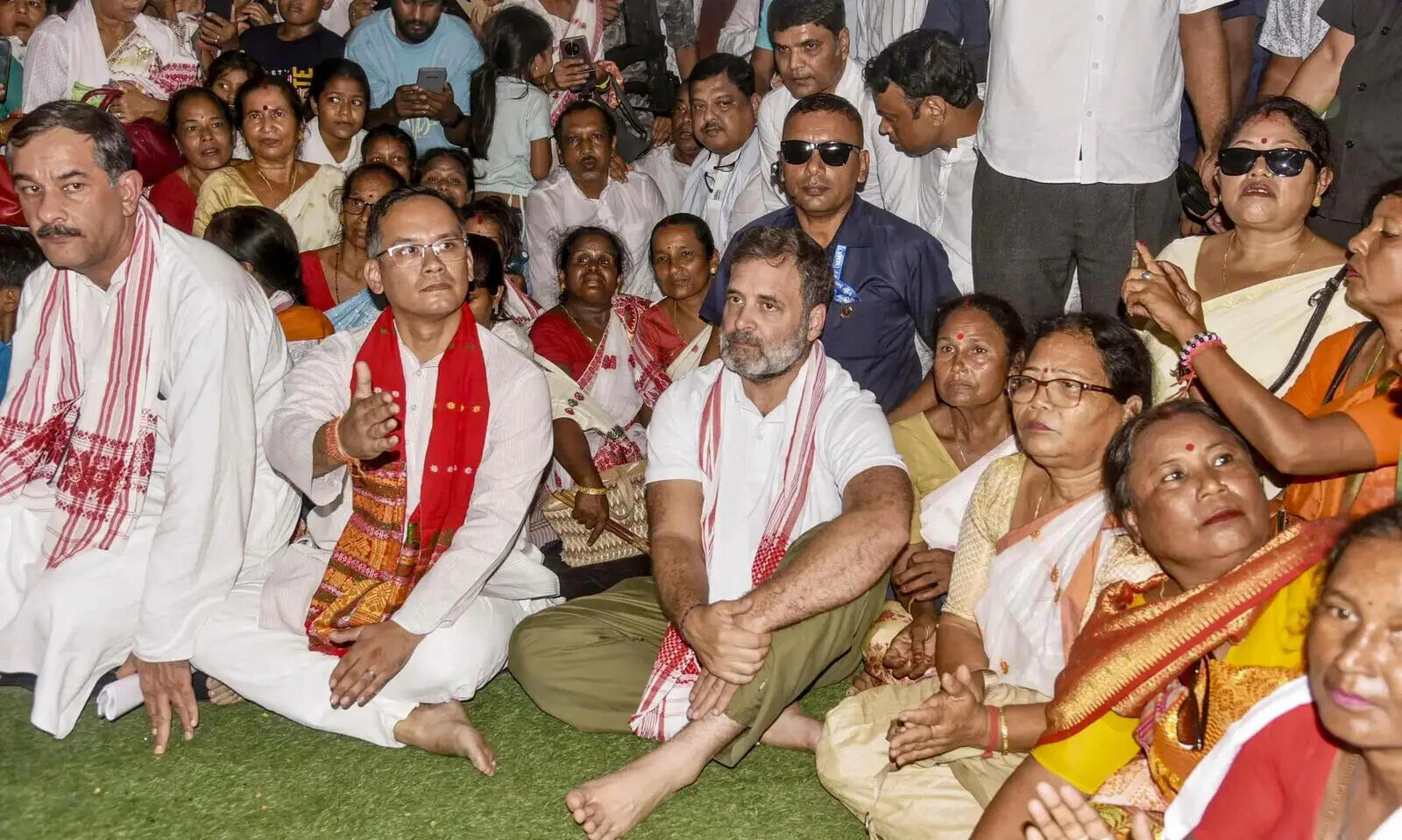
On the other side of the political spectrum, the Congress is attempting a comeback by projecting Gaurav Gogoi as its chief ministerial face.The party has mounted an aggressive campaign against Sarma, targeting both his governance record and ideological positioning. In a sharp attack earlier this year, Gogoi questioned the chief minister’s credibility on identity politics.“What does he try to portray himself as? Does he believe he is a great Hindu leader or a great Khilonjiya leader?” Gogoi asked, challenging Sarma’s claims of representing indigenous Assamese interests on February 4.He further argued that support for the Citizenship Amendment Act (CAA), a deeply contentious issue in Assam. By invoking the term “Khilonjiya”, which refers to the indigenous, “soil-born” communities of Assam, Gogoi sought to reposition Congress within the identity discourse that has traditionally favoured regional and nationalist narratives.
The opposition alliance
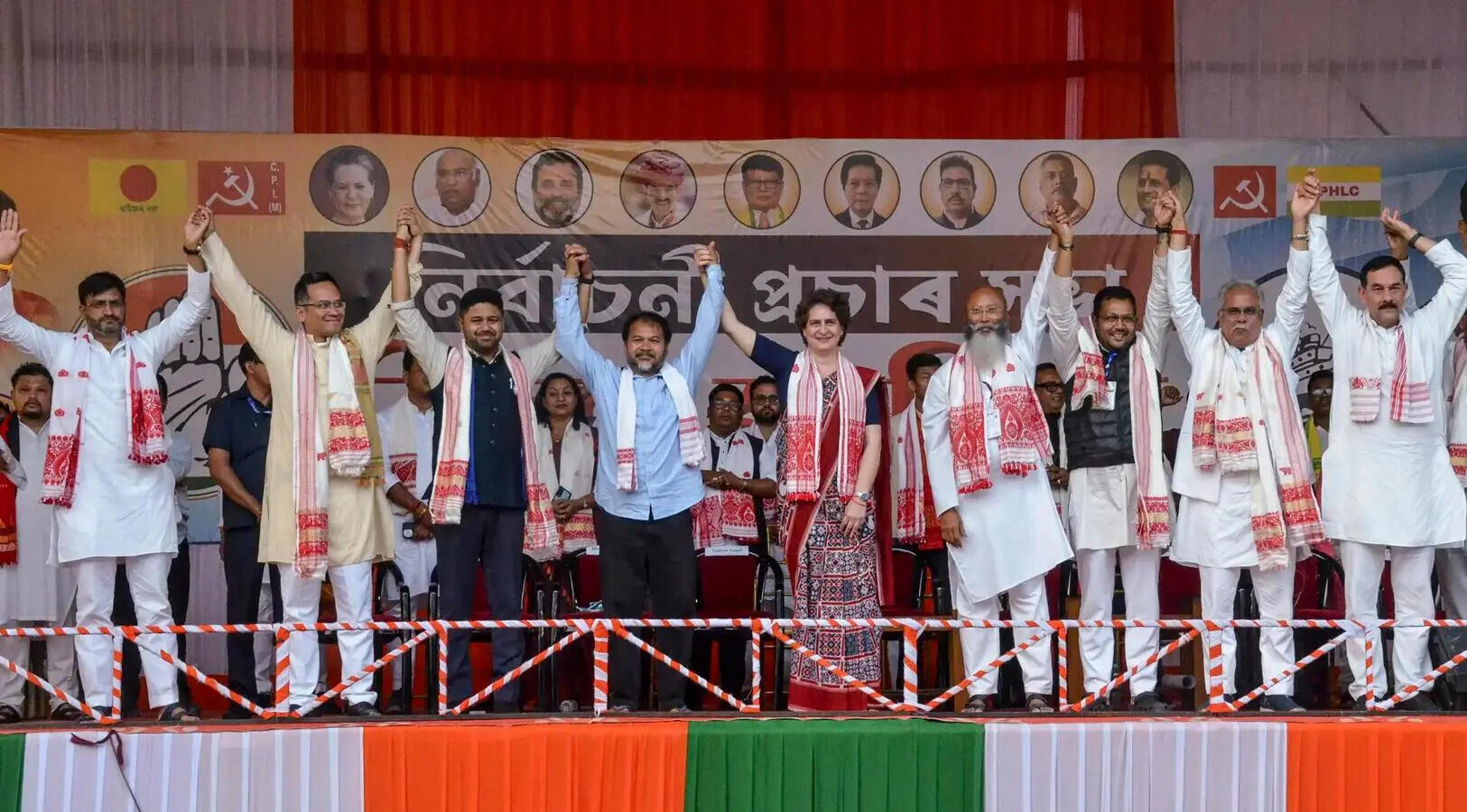
In a bid to counter the BJP’s electoral machinery, the Congress has stitched together a broad, six-party opposition alliance that includes Left and regional forces.The alliance includes the Communist Party of India (Marxist), Communist Party of India (Marxist-Leninist) Liberation, All Party Hill Leaders Conference, Assam Jatiya Parishad led by Lurinjyoti Gogoi, and the Raijor Dal headed by Akhil Gogoi. Together, they aim to consolidate anti-incumbency sentiment and present a united front against the ruling alliance.The alliance has announced candidates for 122 of the 126 seats, with Congress contesting the lion’s share of 94 constituencies. Raijor Dal will contest 11 seats, including two “friendly fights” with Congress.Akhil Gogoi, who had won from Sivasagar in the last elections while being imprisoned on sedition charges linked to the anti-CAA protests, is once again in the fray from the same constituency. Over the years, he has built a strong grassroots image through sustained activism and mobilisation.
Assam Poll: 3G’s
The BJP had already been targeting the parties collectively, treating them as a de facto bloc even before their formal coming together.The BJP labelled the trio as “3G”, pejoratively branding them as “Miya, Miya Pro and Miya Pro Max,” an apparent attempt to portray them as pro-Muslim. At the same time, it warned Lurinjyoti Gogoi that aligning with the Congress would amount to betraying “Assamese nationalism”.Both Gogois belong to the Ahom community, numerically small but socially and politically influential, especially in Upper Assam. The Ahom dynasty, founded by Sukaphaa, ruled the region for nearly 600 years until the advent of British rule in the early 19th century, making the community’s political alignment crucial in several constituencies.
Congress, BJP and the ‘Jatiyotabad’ narrative
Interestingly, both Congress and the BJP have at different points, attempted to appropriate the narrative of Assamese nationalism.Analysts trace this shift back to the tenure of former chief minister Tarun Gogoi, who sought to address identity concerns through measures like updating the National Register of Citizens (NRC). The BJP later amplified this narrative with its “jati, mati, bheti” campaign, positioning itself as the principal defender of indigenous identity.This overlap has blurred ideological distinctions, leaving regional parties struggling to reclaim their original political space.
The past election trends
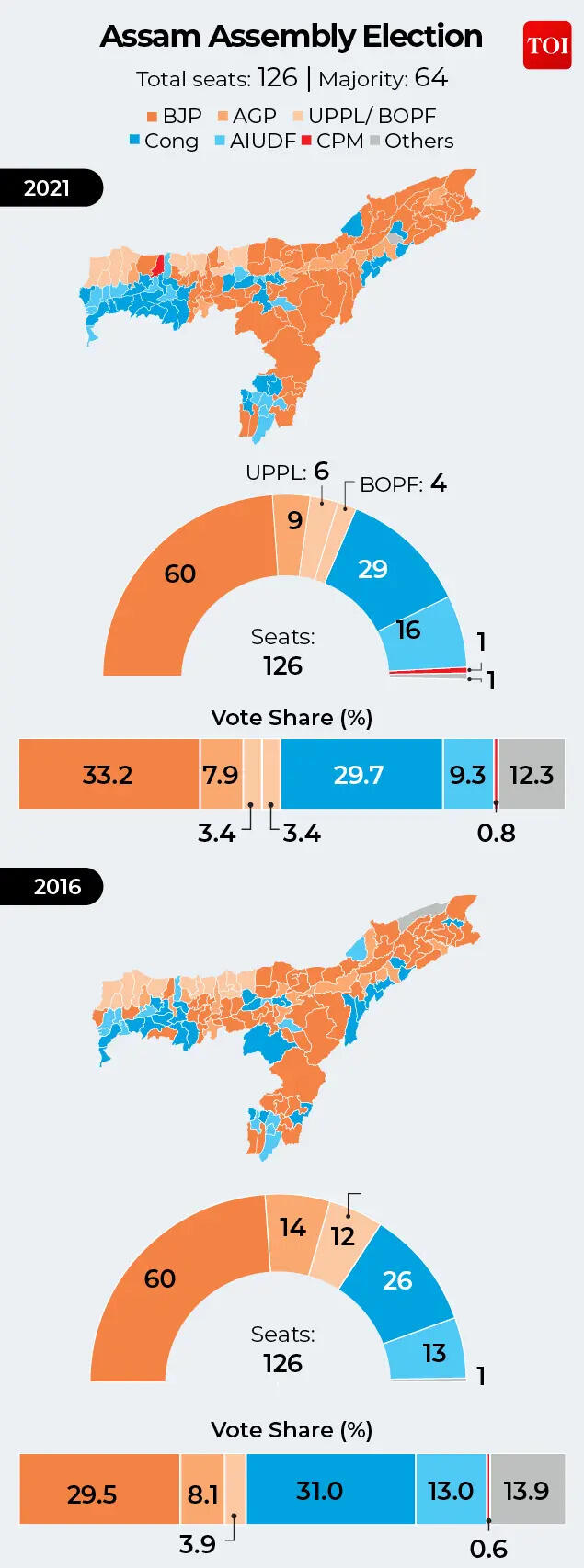
The BJP’s rise in Assam has been dramatic.From just five seats in 2011, the party surged to 60 seats in the 2016 Assembly elections, ending Congress’s 15-year rule under Tarun Gogoi. With the support of allies AGP and BPF, the NDA secured 86 out of 126 seats, forming the government with Sarbananda Sonowal as chief minister.The momentum continued in 2021, when the BJP again won 60 seats and retained power, with Himanta Biswa Sarma taking over as the 15th chief minister of the state.Now, in 2026, the party is looking to consolidate its position further.
High-profile candidates and key contest
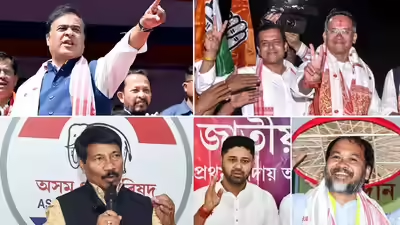
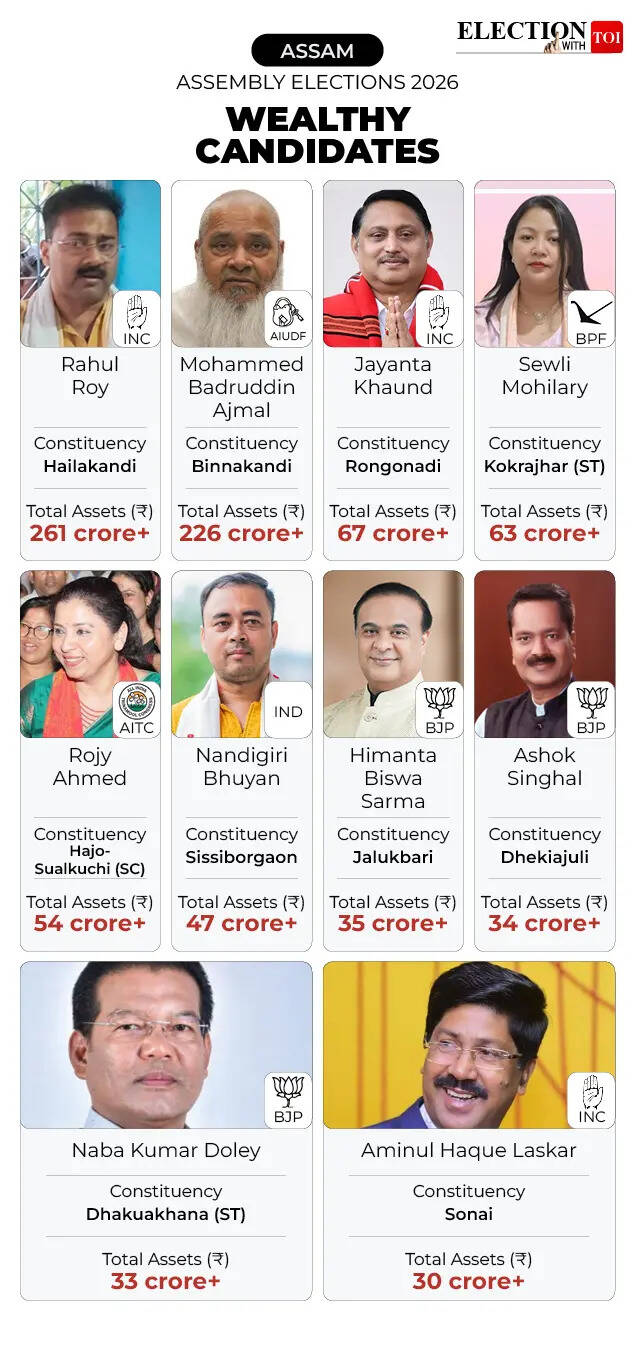
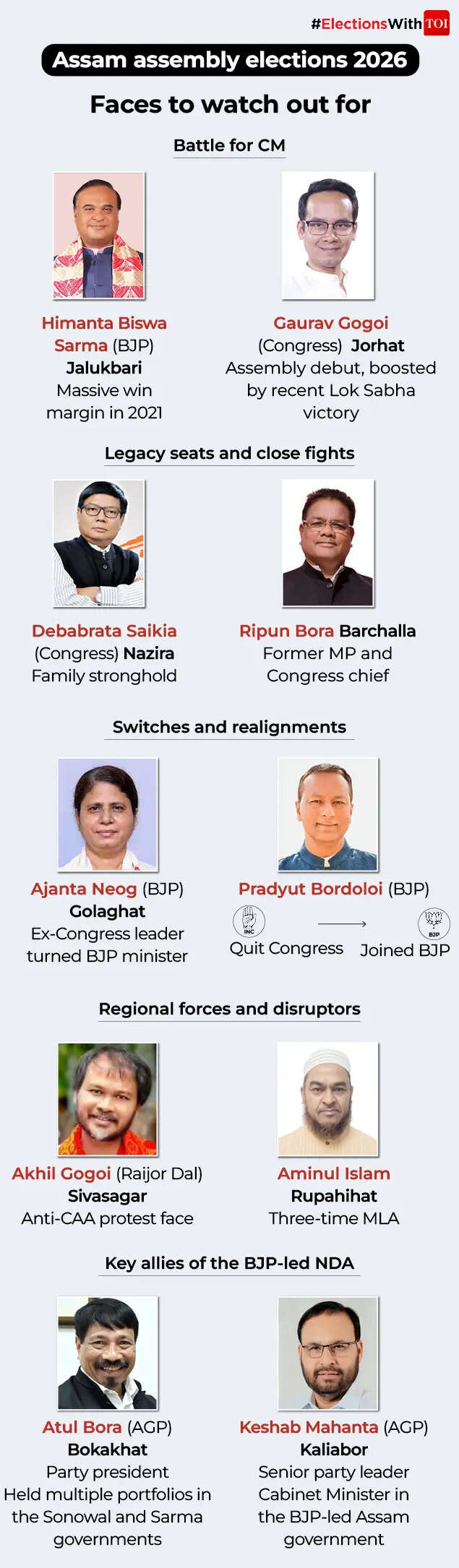
The 2026 elections have drawn a crowded field, with 722 candidates contesting across 126 constituencies. Among the prominent names are Himanta Biswa Sarma, Gaurav Gogoi, Badruddin Ajmal, Assembly Speaker Biswajit Daimary, Leader of Opposition Debabrata Saikia, and senior ministers including Ranoj Pegu, Chandramohan Patowary, Atul Bora, Keshab Mahanta, Ajanta Neog and Ashok Singhal.Regional leaders like Akhil Gogoi and Lurinjyoti Gogoi are also key contenders.
The bigger question
As Assam heads into this crucial election, the contest is not just about who forms the next government.Can the BJP convert its dominance into a standalone majority? Can Congress, with its broad alliance, mount a credible challenge? And perhaps most importantly, can regional parties reclaim their relevance in a political landscape increasingly dominated by national forces?Despite their current limitations, analysts believe regional politics is far from dead.“The sentiment of ‘Asomiya Jatiyotabad’ weighs high for the Assamese voter and public. And people understand that a strong regional voice can only safeguard it,” PTI reported quoting, Brojen Deka.The 2026 Assam assembly elections are in many ways, a test of competing narratives. On one side is a powerful national party seeking to cement its dominance and on the other is a fragmented yet determined opposition trying to reclaim lost ground.And in between lies the enduring question of Assamese identity, its meaning, its guardians, and its future.