


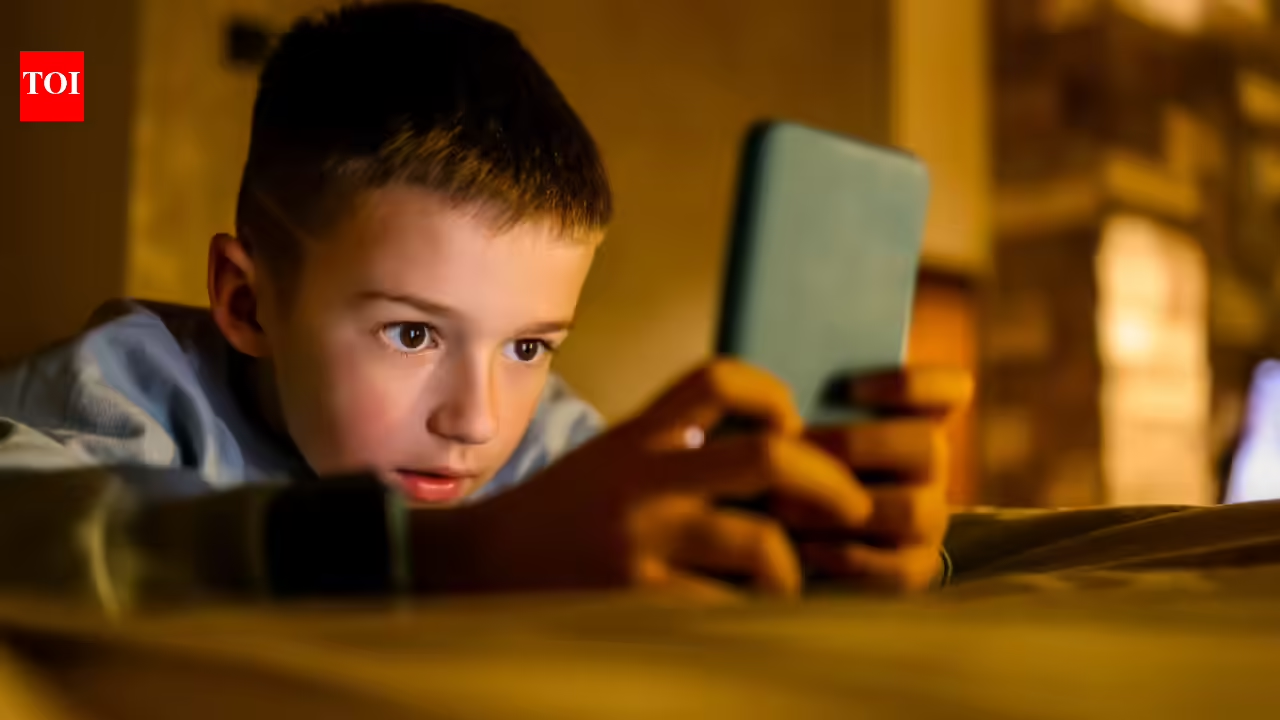
When children spend long stretches with fast-moving, highly stimulating content, the brain can get used to constant novelty. Over time, that can make slower, everyday tasks feel harder to tolerate. The evidence here is still evolving, but the pattern is worrying enough to deserve attention. Research has increasingly pointed to a pattern: certain kinds of screen use, especially when it replaces real-world interaction or involves overstimulating content, are linked with poorer psychosocial outcomes in children. What matters is not just how long a child spends on a device, but what they are watching, how they are using it and whether it is cutting into sleep, play or connection.
Sleep loss makes this even worse. Children who do not sleep well are more likely to struggle with focus, frustration and self-control the next day. That is why screen time, especially before bed, can become a double-edged problem: it does not just take time away from sleep, it can also leave children more scattered, reactive and hard to settle. The Pickard trial and broader sleep research both point to this connection between evening screen habits and daytime functioning.