

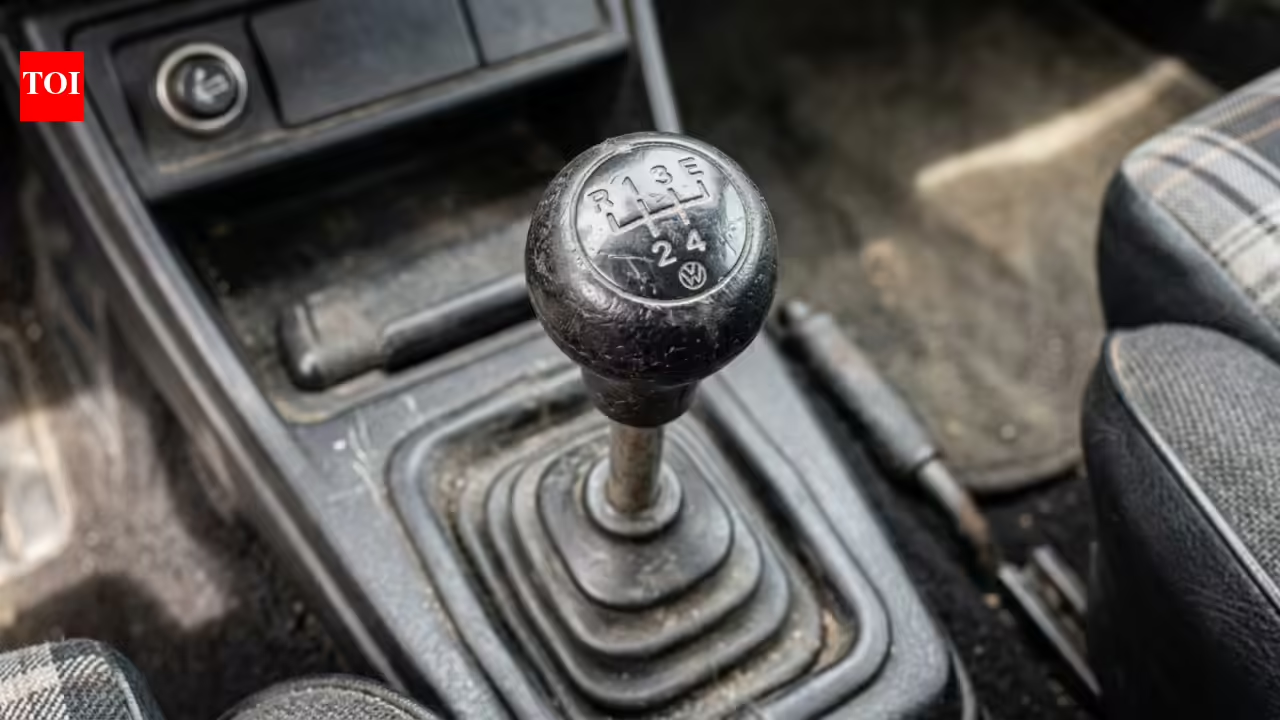
If you’ve ever looked around a classic Volkswagen or seen a vintage car listing mentioning a “3+E” gearbox, you’ve probably wondered what the E stands for. Economy? Extra? Inside joke about German engineering? The answer is actually pretty simple, and a bit fascinating, especially if you are the type of person who enjoys the strange, clever solutions automakers came up with before fuel efficiency became a federal requirement.E is for efficiency, and for a short time in the early 1980s, it was Volkswagen’s little secret to get more miles out of every gallon.The era that made fuel economy personalYou have to go back to the early 80’s to see why this matters. The oil crisis of the 1970s had already taken a toll on American wallets, and suddenly the question at every gas station wasn’t just how much, but how far it would actually take them. Automakers faced serious pressure to rethink efficiency, and Volkswagen had a typically German answer: don’t just build a better engine, build a smarter gearbox.In 1981, Volkswagen introduced the Rabbit (known in Europe as the Golf) with a manual transmission, which Volkswagen called a 3+E manual transmission. It’s like a regular three-speed manual with one very deliberate extra gear bolted on top. That E gear was an overdrive for highway cruising. You’d fall into a lower RPM, the engine would work less hard, and you would burn noticeably less fuel. In a 1983 study in the journal Resources and Conservation, the 1981 Volkswagen Rabbit with a 5-speed manual already used only 7.9 litres per 100 km, less than half the world average at the time, and the researchers found transmission choice to be one of the most significant levers available for improving passenger car fuel economy. For American drivers, that meant an EPA-verified 28 mpg in city driving, up from 24 mpg in the prior model. By 1983, Volkswagen had taken the idea further to a 4+E transmission for some Golf diesels and petrol models. Same principle, one more everyday gear, and that overdrive E still waiting patiently at the top of the shift pattern.
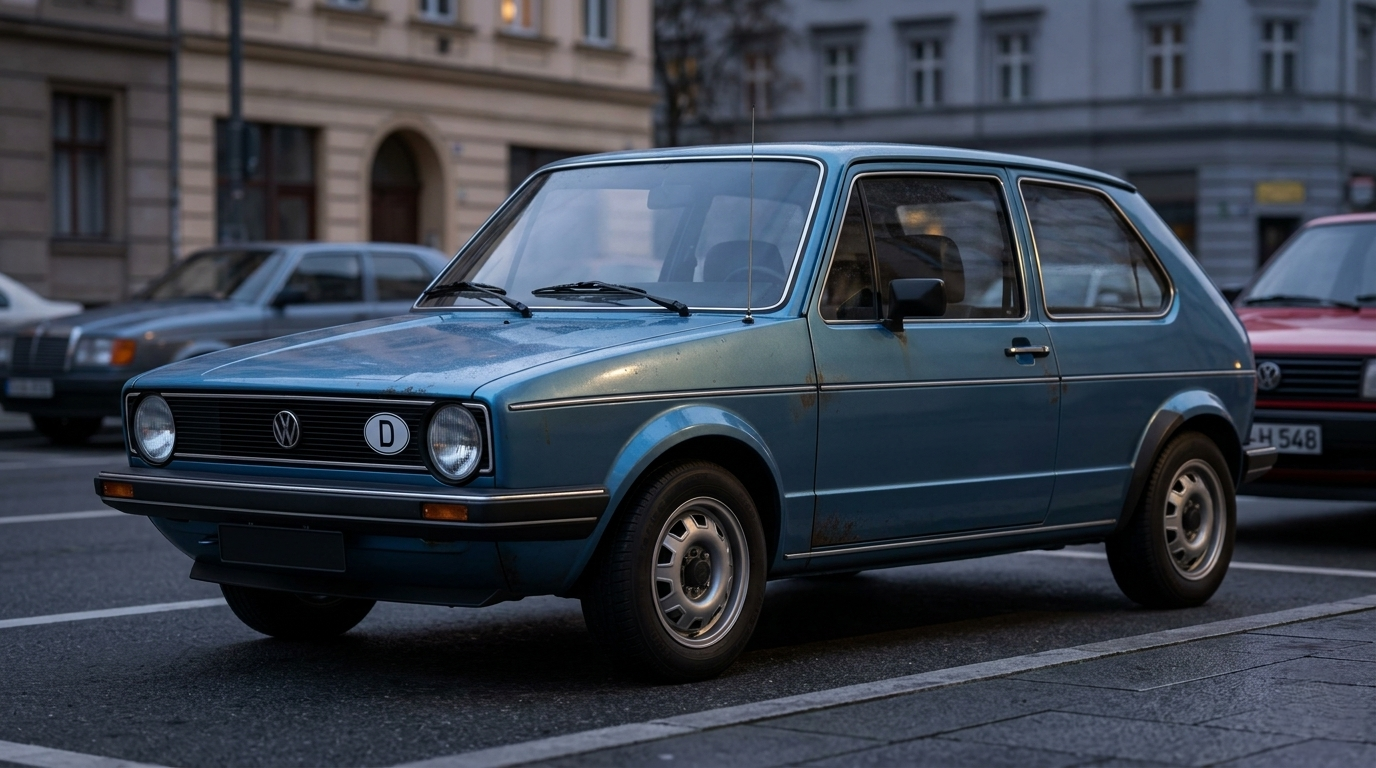
A relic of the era when fuel economy was personal. Image Credits: Google Gemini
So, how do you actually drive it?Like you would drive any manual. The car gathered speed, and you would change up through the gears, first, second, third, and so on. Then you get on the highway, settle into a steady cruise, and push it into D. You’d have lower engine RPM, the cabin would be quieter, and you would be burning less fuel at the same rate. Fewer RPMs also meant less engine wear over the long haul, the kind of thinking that usually ages well.The science of it is all about pumping losses, basically, the energy your engine wastes just breathing at high RPM. The study, The Impact of Engine RPM on Fuel Consumption of Light Duty Vehicles, found that at low engine speeds, fuel consumption is fairly constant, but it increases steeply with RPM as friction and pumping losses increase with the square of speed. Gears such as E, known as overdrive gears, do just that; they allow the engine to drop to a calmer, lower-rpm range where it simply doesn’t have to work as hard. Is it still relevant today?The E gear was a product of its time. Modern engines have moved well beyond the problem they were trying to solve. Cars are far more efficient today, with variable valve timing, direct injection, turbocharging and increasingly sophisticated automatic transmissions, including dual-clutch and continuously variable setups.In the United States, the manual is almost a cultural artefact now. In 2024, less than 1% of new cars sold in America had a manual transmission.A little note to rememberThe E gear never really took off. It briefly appeared on some early-80s Volkswagens, and then quietly disappeared as the industry moved on. However, you have to admire its cleverness: one extra gear, dropped at just the right moment, made a real difference to how far your car would take you.In an era where conversations about efficiency have been reduced to battery range and charging infrastructure, the old Rabbit’s E gear feels almost quaint, but it was solving a real problem with the tools available to drivers who really needed the answer.