


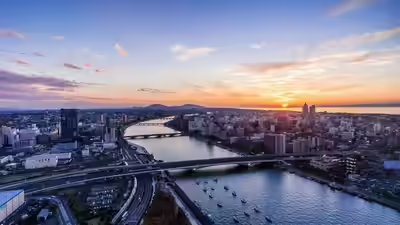
Japan’s landscape is often described as mountainous, narrow, and shaped by water. Rivers cut through that landscape in dramatic ways, sometimes fast and unpredictable, sometimes calm and deeply connected to farming life. The longest rivers in Japan are not just measurements on a map. They are part of how the country survives and grows. They carry snowmelt from the mountains, feed rice fields, and pass through cities that depend on them more than most people realise. Some of these rivers have been part of history for centuries, even millennia. Others remain quieter, less spoken about, but just as important. From the longest Shinano River to the clear waters of the Shimanto, each one tells a slightly different story about nature, people, and survival.As reported by WorldAtlas, these are the 10 longest rivers in Japan from mountain origins to coastal flow.
List of the longest rivers in Japan
Japan’s longest river systems
Shinano River
The Shinano River is the longest in Japan at around 367 kilometres. It begins in the Japanese Alps and flows through Nagano and Niigata Prefectures before reaching the Sea of Japan. In its upper course, it is called the Chikuma River, which can confuse people at first. The river plays a huge role in agriculture, especially rice farming in the Niigata plains. It seems almost built for farming life, slowly feeding water into one of Japan’s most productive regions. There is also a strong historical layer. The Kawanakajima battlefield area lies near its basin, linked to famous samurai conflicts. Experts say the river has shaped both land use and settlement patterns for centuries. It is not just the longest river, but also one of the most economically important waterways in Japan.
Tone River
The Tone River is the second-longest river in Japan at about 322 kilometres, but its importance goes far beyond length. It flows through the Kanto region and supports one of the most densely populated areas in the world, including Tokyo. Reportedly, more than 30 million people rely on its water supply in some form. That alone makes it a critical lifeline. The river has the largest watershed in Japan, spreading across vast plains and agricultural zones. It also has a long history of flood control engineering, which has reshaped its natural flow over time. It appears to be one of those rivers that has been heavily managed to protect human settlements. Without it, modern life in the Tokyo region would look very different.
Ishikari River
The Ishikari River is the third longest river in Japan, at around 268 kilometres and the longest in Hokkaido. It starts in the Daisetsuzan volcanic area and flows through Asahikawa and Sapporo before reaching the Sea of Japan. The river has a large drainage basin, making it one of the most important freshwater systems in northern Japan. It supports both agriculture and urban water supply. The Ishikari has been heavily modified in places, especially near populated areas, but it still retains stretches of natural flow. It seems to represent Hokkaido’s mix of wilderness and development. The river also plays a role in flood control due to heavy snowmelt in spring.
Teshio River
The Teshio River, about 256 kilometres long, is another major river in Hokkaido. It originates in the Kitami Mountains and flows north to the Sea of Japan. Unlike many rivers in Japan, the lower section of the Teshio remains free from major dams or artificial barriers. That makes it unusual. It feels more natural compared to heavily engineered rivers elsewhere. The river basin is surrounded by forests in its upper reaches, while the lower areas open into wide plains with winding curves. Canoeing is popular here, and it reportedly attracts people looking for a more untouched river experience.
Kitakami River
The Kitakami River flows for around 249 kilometres through the Tohoku region. It starts in Iwate Prefecture and moves south between mountain ranges before reaching the Pacific Ocean. One unusual feature is that it splits into two mouths near the coast, which is not very common in Japanese rivers. Historically, it was an important transport route during the Edo period, helping move goods before modern rail systems existed. The river passes mostly through rural landscapes today, giving it a calmer reputation. Experts say it still plays a role in local agriculture and flood management. It has quietly supported communities for centuries without much attention compared to larger, more famous rivers.
Abukuma River
The Abukuma River is about 239 kilometres long and flows through Fukushima and Miyagi Prefectures. It begins in the Nasu Mountains and eventually reaches the Pacific Ocean. The river supports more than a million people within its basin. It passes through valleys and rural farmland, shaping settlement patterns along the way. One notable feature is the Horai-kyo ravine section, where the river cuts through deep terrain. It feels like a river that shifts between calm and dramatic landscapes. Experts often describe it as one of the key rivers in the Tohoku region due to its size and reach. It also holds official classification as a major river system in Japan.
Mogami River
The Mogami River, about 229 kilometres long, flows entirely within Yamagata Prefecture. It is known for its fast current and has been described as one of Japan’s most rapid rivers. That speed gives it a slightly wild personality compared to calmer rivers. The poet Matsuo Basho famously wrote about it in his travel diaries, giving it cultural significance beyond geography. Historically, it was used to transport goods like rice and safflower to other regions. The river flows through narrow valleys before reaching the Sea of Japan. Even today, it is appreciated for its scenic beauty and historical connection to trade and poetry.
Tenryu River
The Tenryu River measures about 213 kilometres in length and is referred to as the “violent Tenryu” on account of its rapid flow and flood-prone nature in previous times. The Tenryu River originates in Lake Suwa, located in Nagano Prefecture and runs through deep valleys before joining Shizuoka Prefecture. Its passage takes place amid a mountainous landscape, thus forming a very natural and rugged environment along with narrow gorges. Several dams have been established on this river due to its exploitation for hydroelectric power generation purposes. However, it still possesses some of its natural characteristics in certain parts of the river.
Agano River
The Agano River is around 210 kilometres long and flows through Fukushima, Gunma, and Niigata Prefectures. It begins in the mountains and passes through the Aizu Basin before reaching the Sea of Japan. One of its historical highlights is its connection to early hydroelectric power development in Japan. It also supports agriculture and local communities along its basin. The river receives water from Lake Inawashiro and the Tadami River, which increases its volume significantly. It appears to be a river shaped by both natural inflow and human development. Its basin supports hundreds of thousands of people. It is not the most famous river in Japan, but it plays a steady and important role in regional life.
Shimanto River
The Shimanto River is about 196 kilometres long and flows through Kochi Prefecture on Shikoku Island. It is often called “the last clear stream in Japan” because it has no dams along its main course. That alone makes it stand out. The river is known for its clean water and traditional sinking bridges called chinkabashi, which disappear under floodwaters instead of resisting them. It feels almost untouched compared to heavily engineered rivers elsewhere in Japan. Fishing and small-scale agriculture still depend on it. Experts say it represents one of the closest examples of a natural river system in the country.