


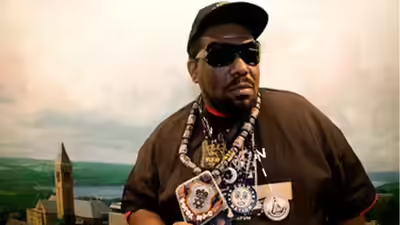
Afrika Bambaataa helped shape early hip-hop and rose to fame as a DJ, producer, and cultural force whose influence stretched far beyond the Bronx. He passed away at the age of 67, and his demise brought fresh attention to his life; the bigger story remains the scale of his impact on music and hip-hop culture. From block parties in New York to records that traveled across the world, Bambaataa played a central role in building the sound, style, and reach of a movement that changed popular music.
Afrika Bambaataa’s hip-hop legacy
TMZ describes Bambaataa as “a leading disseminator of hip-hop music and culture.” He became widely known as one of the early architects of hip-hop and as the founder of the Universal Zulu Nation, which he launched in the 1970s. Over time, that work helped turn hip-hop from a local youth culture into a global force built around “Peace, Unity, Love, and Having Fun.”According to Britannica, Bambaataa gained recognition in the mid-1970s by organizing block parties and break dancing contests in the Bronx. He stood out for his turntable skills and for the wide range of music he mixed into his sets. His record collection was so varied that some called him the “Master of Records.” He also helped define the core parts of early hip-hop alongside other pioneers, giving shape to a culture that was still finding its voice.
Afrika Bambaataa’s career and influence
Bambaataa became known for songs that helped shape hip-hop. His biggest hit was ‘Planet Rock’ in 1982. He also released tracks like ‘Looking for the Perfect Beat’, ‘Unity’, and ‘World Destruction’.For more than four decades, Bambaataa remained tied to the Universal Zulu Nation. The group grew beyond New York and expanded into other countries. His influence also reached later acts connected to that orbit, including De La Soul, A Tribe Called Quest, and the Jungle Brothers.