


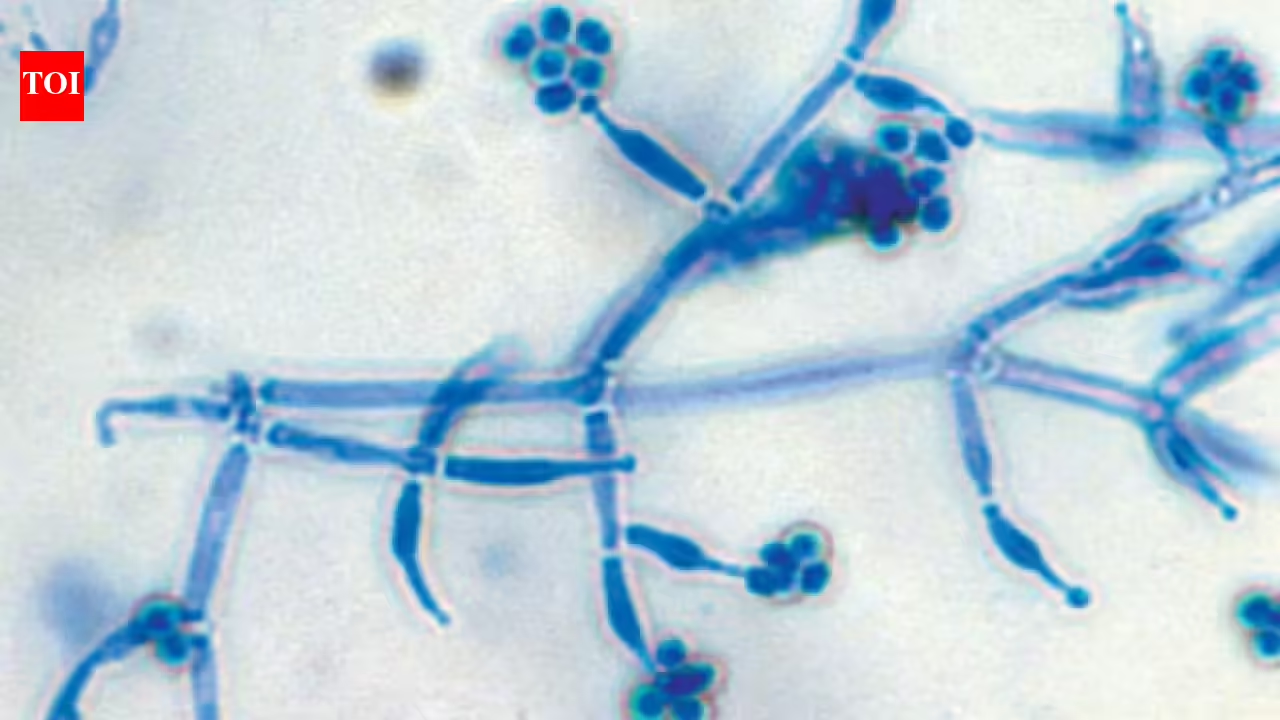
Transforming your indoor garden into a resilient ecosystem starts with understanding ‘The Green Guard.’ The efficient use of Trichoderma will serve as a biological shield against the destructive soil-borne pathogens in home plants. The research conducted by the University of Connecticut (UConn) has shown that Trichoderma, particularly Trichoderma harzianum, colonise the rhizosphere and inhibits disease such as root rot through mycoparasitism and induces systemic resistance. In addition to their protective functions, research published in the International Journal of Molecular Sciences indicates that Trichoderma can also function as an effective biostimulant to increase both nutrient uptake and physiological plant transitions in ornamental species.
What is Trichoderma, and how does it help in boosting plant growth and nutrient uptake
The name Trichoderma defines a large group of good, naturally occurring soil fungi that grow on every type of soil found worldwide. This fungus is also known as a ‘friendly fungus,’ because it works in partnership with the roots of plants. Conversely to harmful fungi that can damage plant roots and stems, Trichoderma provides plant roots with a beneficial, biological defence against pathogens and enhances their growth. For these reasons, Trichoderma is used extensively by organic producers and gardeners because it can effectively colonise the rhizosphere, which is the area of soil surrounding a plant’s root system that is affected by root secretions, and help create a healthy and nutrient-rich habitat for the plant.
How Trichoderma protects your plants and the specific diseases it targets
- One of the main reasons to apply Trichoderma to plants is its function as a biological fungicide. Trichoderma harzianum (specifically the T-22 strain), according to the University of Connecticut, protects plants against root rot by preying on and consuming pathogenic fungi, such as Pythium and Rhizoctonia, through a process known as mycoparasitism. The best way to apply Trichoderma for home use is via a soil drench or mixed in with potting soil. This protects before the pathogens have had time to attack the plant and ensures that beneficial fungi are present in the ‘rhizosphere’ (the area surrounding the plant roots).
- In addition to its protective properties, Trichoderma is also a very effective biostimulant. A study published in the International Journal of Molecular Sciences demonstrated that ornamental plants treated with Trichoderma asperellum had higher dry weights and greater chlorophyll content than untreated plants.
- Therefore, not only do the plants in your home remain healthy, but they also grow more rapidly and look greener. Research indicates that Trichoderma aids plants in ‘solubilising’ nutrients in the soil, which enables roots to absorb minerals that are typically difficult to access.
Trichoderma for plants: How to apply it the right way
- New Plant Preparation: Soak the root base of newly purchased plants for at least 10-15 minutes in a ‘slurry’ (1-part powder and 10 parts water) of Trichoderma to assist them in making the transition from their previous home to yours without suffering from transplanting shock.
- Soil Conditioning: Mix the Trichoderma powder evenly into your dry or slightly damp potting soil before planting; then, water lightly to settle the mix.
- Routine Care: Every 4 to 6 weeks, reapply the Trichoderma as a high-volume ‘drench’ to maintain a healthy population of the fungus in the planted container.
How to keep Trichoderma alive and active in plants
To use Trichoderma successfully on indoor plants, the environment must be suitable for the organism to grow.
- Trichoderma can only survive in soil with the right amount of moisture and at the right temperature (usually between 68 degrees Fahrenheit and 86 degrees Fahrenheit (20 degrees Celsius to 30 degrees Celsius). If you are applying Trichoderma as a soil amendment, then both the temperature and the pH must be in a good range to help it grow.
- To be effective, do not use chemical fungicides for at least 7-10 days after applying Trichoderma to your plants, as the chemicals will kill Trichoderma.
- According to the study on Trichoderma, these microorganisms grow best in high organic matter, such as compost and coco-peat. Organic matter provides the fungus with the basic energy needed to begin to grow.