

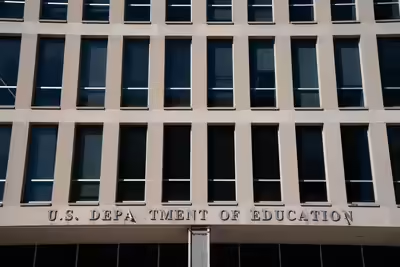
The US Department of Education has officially ended the controversial ‘Saving on a Valuable Education’ (SAVE) Plan, which was repeatedly blocked by courts for being illegal. Around 7.5 million borrowers who joined the SAVE Plan based on promises of “student loan forgiveness” and unusually low monthly payments will now be guided to switch to legal federal student loan repayment plans. The move aims to clarify obligations for borrowers, protect taxpayer funds, and put an end to the uncertainty surrounding the SAVE Plan.The SAVE Plan was the Biden Administration’s third attempt at mass student loan forgiveness, but it faced repeated legal challenges in federal, district, and appellate courts. Estimates suggest the program could have cost more than $342 billion over 10 years if implemented. Earlier this month, a federal court approved a settlement between the Department of Education and the State of Missouri, officially ending the plan. Under the settlement, the Department will stop enrolling new borrowers, deny pending applications, and move all existing SAVE Plan participants into lawful repayment plans.
What borrowers should know
Starting July 1, 2026, federal loan servicers will begin notifying borrowers about the end of the SAVE Plan. Borrowers will have 90 days to choose a legal repayment plan. If a borrower does not select a plan within this period, they will automatically be moved into either the Standard Repayment Plan or the new Tiered Standard Plan, which also launches on July 1. Borrowers can also contact their loan servicer at any time to switch to a legal repayment plan before their 90-day deadline.The Department’s Office of Federal Student Aid (FSA) will provide guidance and support throughout this transition. Emails will be sent to all SAVE Plan borrowers, explaining how to select a new repayment plan and highlighting options that are both affordable and sustainable. The Department emphasizes that borrowers now have ample time to make informed decisions about their financial future.
New federal repayment options
Two major repayment plans will be available starting July 1:
Repayment Assistance Plan (RAP) – This income-driven plan calculates monthly payments based on the borrower’s income and number of dependents. Unlike some existing plans, RAP ensures that borrowers who make full, on-time payments can reduce their loan principal while avoiding runaway interest. The plan is designed to make repayments more manageable while keeping borrowers on track to fully repay their loans.- Tiered Standard Plan – This plan offers fixed repayment terms of 10, 15, 20, or 25 years, depending on the total loan balance. Borrowers with larger debts will benefit from lower monthly payments and extended repayment timelines, making it easier to manage larger student loans.
For borrowers applying for income-driven repayment plans, the Department can access federal tax records with the borrower’s consent. This allows faster processing of applications without the need to manually upload income information.
Moving forward
The Department has stressed that this transition is not meant to penalize borrowers. Instead, it ensures that borrowers are in legal repayment plans while safeguarding taxpayer interests. The 90-day period gives borrowers enough time to explore repayment options and select a plan that fits their financial situation.Borrowers are encouraged to take action promptly and review their choices carefully. The Department aims to make the process simple, transparent, and supportive, helping borrowers stay on track with their loans while minimizing financial stress.For more details on the settlement and the new repayment options, borrowers can visit StudentAid.gov/courtactions.