



Family life rarely stays neatly divided into separate compartments. When a marriage becomes emotionally strained, the effects often ripple through the rest of the household, including the bond between parent and child. A study by Chrystyna D. Kouros, Lauren M. Papp, Marcie C. Goeke-Morey and E. Mark Cummings, “Spillover between Marital Quality and Parent-child Relationship Quality: Parental Depressive Symptoms as Moderators,” suggests the answer is sometimes, but not in a simple or universal way. The researchers found that marital distress often spills over into parenting, but in some cases, especially for mothers, a strained marriage is followed by warmer parent-child interaction the next day. In other words, some parents may compensate for a difficult marriage by turning more energy toward the child, though the stronger and more consistent pattern was spillover, not compensation. Scroll down to read more…What the study looked atThe study followed 203 families and used a 15-day daily diary method, which is important because it captures family life as it actually unfolds, day by day, rather than relying only on memory or broad impressions. Each evening, mothers and fathers separately rated the emotional quality of their relationship with their spouse and with their child. That design allowed the researchers to ask a sharper question than most family studies do: when the marriage is worse on one day, does the parent-child relationship also worsen that day or the next day? And if not, does a troubled marriage sometimes make a parent invest more in the child instead?What “spillover” meansThe study builds on two competing ideas. The first is spillover: when stress, conflict or negative emotion in the marriage carries into parenting. A parent who feels hurt, irritated or emotionally drained at home may be less patient, less available and less responsive with a child. The second is compensation: when a parent responds to disappointment in the marriage by putting more care, energy or warmth into the parent-child relationship. In that case, the child may become a source of comfort, meaning or emotional relief. The researchers found stronger support for spillover overall. On days when mothers and fathers rated their marriage more positively, they also tended to rate their relationship with their child more positively the same day. That pattern held even after controlling for broader measures such as marital satisfaction, marital conflict and parenting.What the study found about emotional dependence
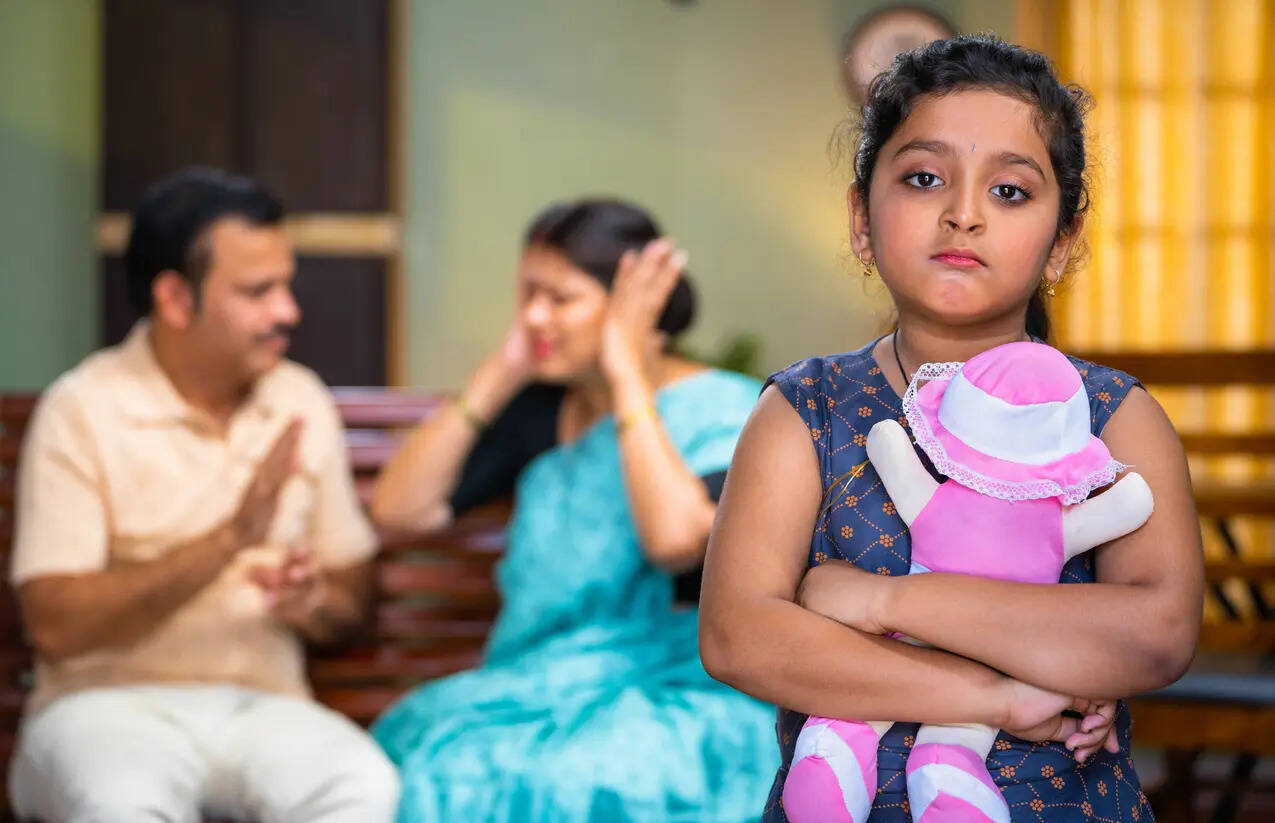
The question of whether an unhappy marriage can make a parent emotionally dependent on a child is not exactly how the study framed it, but the findings do point toward a related dynamic. For mothers, the study found evidence for the compensatory hypothesis in the short term: when marital quality was lower, mother-child relationship quality increased from one day to the next. That does not prove emotional dependence in a clinical sense, but it does suggest that some mothers may turn toward their child for emotional nourishment or connection when the marriage feels unsatisfying. That said, this pattern was not the dominant one. Across the sample, the more common effect was still spillover: marital strain was linked with weaker parent-child relationship quality.Depression made the pattern strongerOne of the most important findings was that parents’ depressive symptoms changed the picture. Maternal and paternal depression both moderated the link between marital quality and the parent-child relationship, but in different ways. For fathers, maternal depressive symptoms strengthened spillover on the next day. For mothers, paternal depression reduced spillover on the same day. In plain language, depression can act like an amplifier in family life. When a parent is already struggling emotionally, the impact of a difficult marriage may be more likely to seep into the relationship with the child.What this means in real lifeThe study does not say that every unhappy marriage makes a parent emotionally dependent on a child. It does say something more nuanced: family relationships are deeply connected, and distress in the marriage often travels into parenting.

Sometimes that travel looks like withdrawal, irritability or reduced warmth. Sometimes, especially for mothers in this study, it may look like the parent tries to compensate by investing more in the child. But compensation should not be romanticized too quickly. A child should never become the emotional substitute for a broken adult relationship.The cleanest conclusion from this study is that marriage matters far beyond the couple. The emotional temperature of the marital relationship shapes the parent-child bond, often within the same day. And when depressive symptoms are present, those links can become even stronger.So, can an unhappy marriage make a parent emotionally dependent on their child? Sometimes it may push a parent to lean more heavily on the child for comfort or connection, but the broader pattern is spillover, not healthy substitution. The study’s message is less about dependence and more about contagion: when marriage suffers, family life often feels it everywhere.