

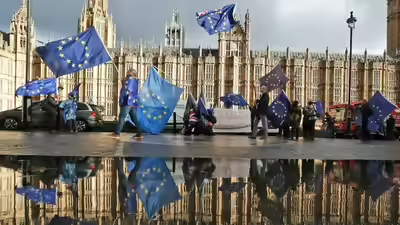
A decade has passed since the United Kingdom voted to leave the European Union, a decision that continues to define political loyalties and the end of deep ties within the region. On June 23, 2016, just over half of voters, about 52% or 17 million, chose to exit the bloc, setting in motion the biggest transformation of British economic and social life since the Second World War. Despite the decisive vote, untangling the UK from the EU took nearly five years to finalize.The push for Brexit grew out of public anger toward both Brussels and the lingering effects of the 2008 financial crash. Supporters promised that cutting ties with Europe would let Britain focus on its own priorities and regain its footing. Opponents countered that the split would damage the economy and weaken the UK’s global standing.
The economic toll
Supporters envisioned a newly independent Britain thriving through trade deals and entrepreneurial energy. A decade later, that revival hasn’t materialized, though the pandemic, the war in Ukraine, and more recently, the conflict between the US, Israel, and Iran have all complicated the picture, as reported by AP.Businesses still report friction in trading with the European neighbours, the EU, which remains the UK’s largest trading partner by far. While tariffs weren’t imposed, exporters now face extensive paperwork, border checks, and visa hurdles. Promised trade agreements, particularly with the United States, never came through.Economists estimate the UK economy is somewhere between 4% and 8% smaller than it would have been had the country stayed in the EU, a gap that translates into lower living standards and less funding for public services like the National Health Service. Leave campaigners had famously pledged an extra £350 million a week for the NHS. “Brexit has made the UK economy smaller than it otherwise would have been,” said Jonathan Portes, professor at King’s College London.“The effect has not been a sudden collapse, but a gradual and cumulative drag on trade, investment and productivity,” he wrote in an article for The UK in a Changing Europe think tank.Brexit supporters maintain that such judgments are premature, arguing that short-term economic pain was always the price of regaining control over policy areas like immigration.
Immigration debates
Ending free movement with the EU was central to the Leave campaign’s “take back control” message, but the results have been mixed. While migration from EU countries has dropped sharply, arrivals from outside Europe have risen, partly due to visa changes made by the previous Conservative government to fill labor shortages in sectors like elder care.However, overall net migration has fallen substantially, from over 900,000 in 2023 to 171,000 the following year. Still, public frustration has centered less on these numbers and more on illegal crossings, particularly people fleeing conflict zones like Afghanistan and Sudan who arrive via small boats across the English Channel. Crossings peaked at 46,000 in 2022 and reached 41,000 the next year. Though a small fraction of total migration, this issue has become politically explosive, with protests, some turning violent, breaking out at hotels housing asylum seekers.
Public opinion has shifted
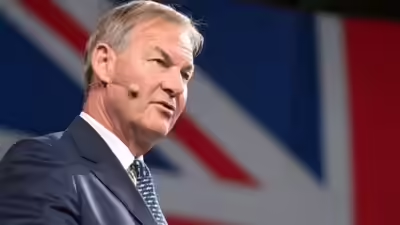
Brexit reshaped British politics, eroding support for the traditionally dominant Conservative and Labour parties alike. Conservatives lost power in 2024 after 14 years marked heavily by infighting over EU relations. Labour’s tenure since hasn’t fared much better, with Prime Minister Keir Starmer reportedly poised to step down soon.Nigel Farage’s Reform UK, led by perhaps Brexit’s most prominent champion, has topped opinion polls for over a year. Meanwhile, sentiment has soured nationally: Ipsos polling shows 52% would now back rejoining the EU versus 33% opposed, and nearly half of respondents believe Brexit has gone worse than expected. Almost as many would support a fresh referendum on EU membership.
Reconciliation, but not reversal
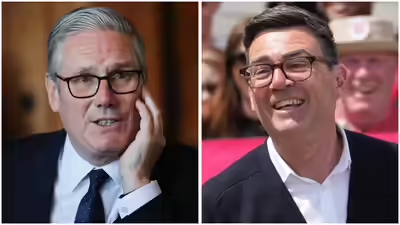
Labour has tried to thread a needle since taking power in 2024, ruling out both reversing Brexit and rejoining the EU’s single market, which leaves little room to maneuver. Starmer has pursued a “reset” with Brussels focused on easing trade friction, with further announcements expected at an upcoming EU summit, assuming he remains in office.His rumoured successor Andy Burnham, amid the internal dispute speculations, softened his EU-related rhetoric while campaigning ahead of winning a special election this past week against a Reform challenger in a strongly pro-Brexit constituency. He has been careful to stress that he isn’t pushing for EU membership, framing it as a matter of respecting the original referendum result.“I am not proposing that the UK considers rejoining the EU,” Burnham said. “I respect the decision that was made at the referendum and it is going to undermine everything I have said about strengthening democracy if we don’t respect that vote.”