

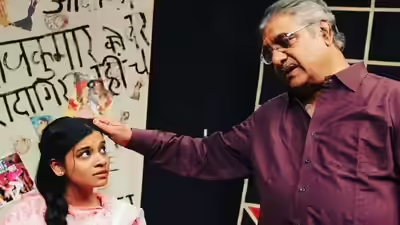
After spending nearly 15 years immersed in theatre, Ranjana Aanjjan has finally stepped into the world of screen acting with Chand Tara — a project that has already earned the distinction of having its trailer screened at the prestigious Cannes Film Festival. But for Ranjana, the journey has never been about glamour or overnight fame. Raised in a deeply rooted theatre family and mentored by stalwarts like her father Aanjjan Srivastav alongside legends from the Indian People’s Theatre Association fraternity, she grew up believing in craft, discipline, and the process more than the outcome.In this candid conversation with ETimes, Ranjana opens up about the overwhelming transition from stage to screen, her father’s unwavering support, the financial struggles that shaped her middle-class upbringing, and the life lessons she learned from icons.
After spending nearly 15 years in theatre, you are now making your screen debut with Chand Tara. How are you feeling right now? Was stepping onto a film set emotionally and creatively overwhelming?
Very overwhelming. In fact, we started shooting around February 9, and I was locked for the part only on February 5 after multiple rounds of auditions and screen tests. That left me with just four days of preparation because the shoot was already planned, but there were several logistical issues and uncertainty around the casting before things finally worked out.I remember spending those four days crying because imagine doing 15 years of work and then finally getting your first opportunity in films. Although I wasn’t looking at it as a “big break,” I was looking at it as another project. It was a small-budget film made largely by theatre people. We weren’t dealing with massive budgets or anything extravagant; we simply wanted to tell a story.But after all those years of work, the fear was that if I finally got this chance and messed it up, what then? I was genuinely considering stepping back because I felt I had too little time to prepare. I had to pick up a Hyderabadi Urdu accent, understand the style of a singer from a period drama, and deal with heavy lines. Memorising lines was the only easy part because theatre trains you to remember entire scripts.It was highly overwhelming, but at the same time, when you’re in the process, you don’t think too far ahead about the film eventually releasing or becoming something bigger. After 15 years of constantly doing stage work — three or four plays every month, rehearsing five to seven hours a day — acting had become a way of life for me.One of the best pieces of advice I got came from the director himself. He told me, “Don’t panic. Treat it like a play.” Since we were all from the same theatre fraternity, that advice really calmed me down. I eventually approached the film exactly the way I would approach a stage production.Those 15 years in theatre prepared me for a moment I never imagined would actually happen.
Were you always looking to make a transition into films and screen acting?
No, not at all. Until Covid happened, I never really thought about entering films or screen acting.I was deeply involved with my theatre group. I was acting, managing productions, handling lights and sound, figuring out ticket sales — basically doing everything. I was even my father’s proxy actor when another actor would be absent, and I also helped him with his screen-related work as a secretary of sorts.I genuinely believed screen acting was something I might not be prepared for. I wasn’t sure if I understood its grammar because screen acting is very different and very difficult in its own way.Then Covid happened, and suddenly there was no stage to perform on. Theatre took a very long time to recover economically, while screen auditions slowly started resuming. I became desperate to start acting again because acting was such an integral part of my identity, my upbringing, and my home environment.When that was suddenly taken away, it created a huge identity crisis. Thanks to Covid, ironically, I started trying for screen work in 2021. I finally managed to break in last year with an OTT project that will release this year, but it took me four to five years to make the transition from stage to screen.People often assume theatre actors can easily adapt to screen acting, but I don’t think that’s true at all. Both mediums are extremely different and vivid in their own ways.
What was going through your mind during the Covid period when theatre had completely stopped?
It was probably the most frustrating period of my life, though of course it was difficult for everyone.Until Covid, I never felt the need to do anything else because theatre gave me complete satisfaction. On stage, you live an entire story and receive immediate gratification through the audience’s response. I think I was very comfortable in that world.Validation-wise too, my father was happy that I was involved in theatre because he himself loves theatre more than any other medium. I grew up around theatre legends like Rakesh Bedi, Sulabha Arya, Ramesh Talwar and others who had known my parents even before I was born. They saw me grow up. Theatre was home and comfort for me.Everything after leaving the stage and entering screen acting has been a challenge because this is unfamiliar territory. Here, you’re really on your own. It doesn’t matter who you’re related to — you may get an opportunity, but survival depends entirely on your own merit.That’s why while I feel excited, I’m also constantly worried. Will I continue getting opportunities? Will I always deliver? Will I be able to adapt to the grammar of screen acting? Those insecurities exist.So this moment makes me very happy, but it also keeps me extremely alert about what comes next.
Do you look for validation more from the audience, the industry, or directors?
As actors and directors, we ultimately create work for the audience, so their response is extremely important. If the audience doesn’t connect with you, you are nothing. Their feedback is a very valid form of criticism and should absolutely be taken seriouslyBut during the process of filming, my director becomes everything. My instincts and the director’s vision matter the most in that phase because the director understands the complete picture. They know where my character fits into the larger universe of the film.At the same time, audience feedback is equally important because that is ultimately who we perform for, even in theatre.The irony of acting is that regardless of what instructions a director gives, the actor ultimately bears the burden of the performance. Nobody will ask after a bad performance whether the director instructed you to do it that way. So while I follow the director’s vision completely, I also believe actors must always listen to audience feedback carefully.
Your very first film is already connected to Cannes. How are you processing that? Is there pressure?
No, not pressure at all. The trailer is getting screened there, so honestly only good can come out of it.For us, it feels like a small pat on the back — an acknowledgment that we worked hard and somebody appreciated the work enough to send it to such a prestigious platform.The film has a lot of heritage value because it is backed by Telangana Tourism and revolves around the iconic Taramati Baradari. Most visitors don’t even know who Taramati was or the significance of her music and story during the Sultan’s era. The film attempts to preserve and tell that story.When we made the film, nobody was thinking about Cannes or prestigious screenings. We were simply trying to make the best film possible. I was trying to act to the best of my ability, and they were trying to tell a meaningful story.Of course, it’s a pinch-me moment. But after May 18, once the trailer screening is done, we’ll all go back to work. Most of us will return to theatre and continue our lives.Still, I must admit that I never imagined I would ever see my face on a screen associated with such a prestigious platform. Even though my father is part of the industry, I never dreamt of something like this because both he and I have always focused only on the process, not the outcome.This experience has taught me that in this profession, anything can happen at any time. Life can change completely when you least expect it.
How did your father react to your first film and this Cannes moment?
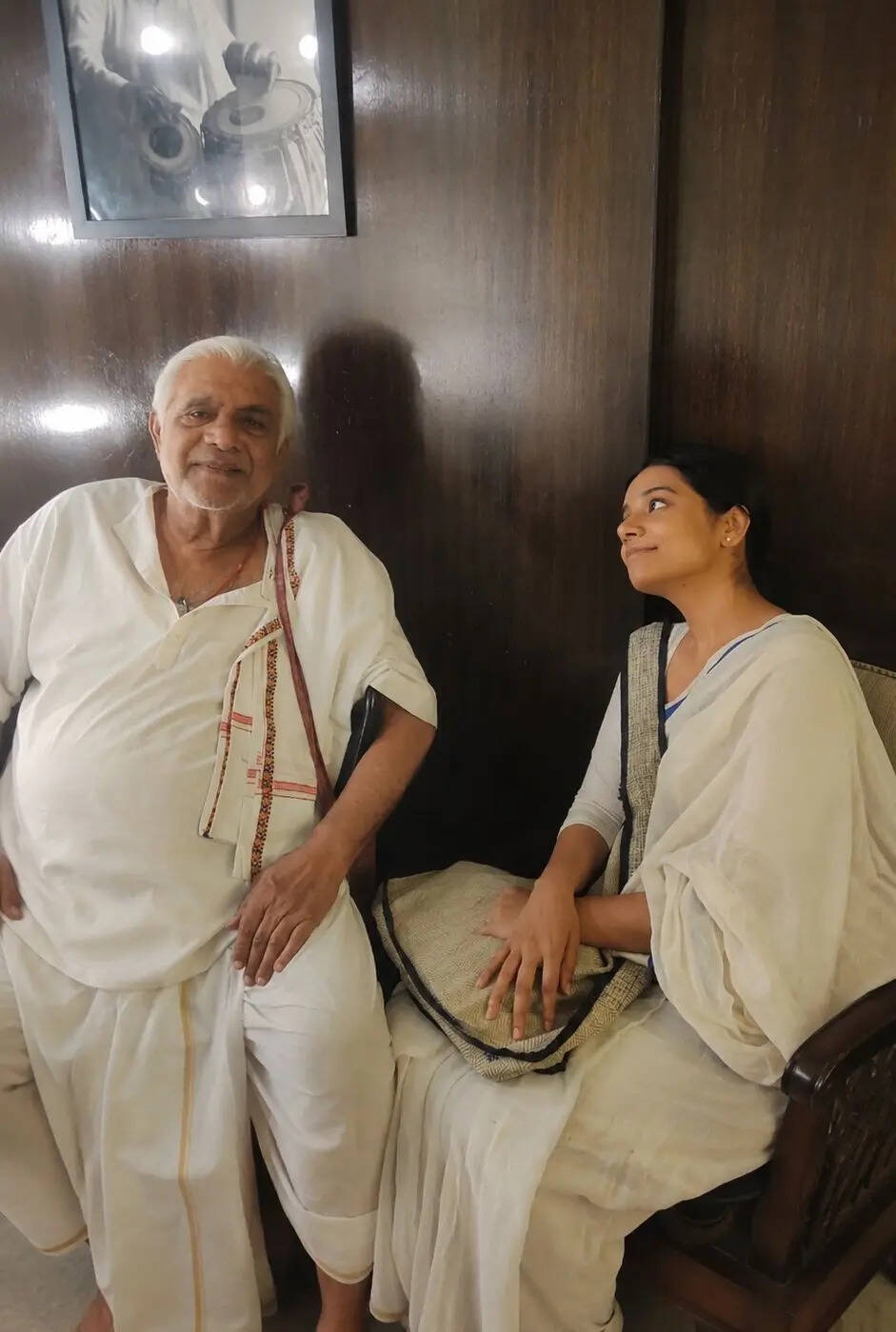
I think he’s as happy as if he himself were going there.He’s usually a very composed person, and honestly, so am I. But the last time I saw him this happy was when I first stepped on stage, and before that when I scored well in my Class 10 exams.This time, he is genuinely overjoyed. And for me, the real “pinch-me” moment is seeing my parents this happy.Imagine someone who has spent more than 50 years in the industry watching their child follow the same path and finally achieve something meaningful. That joy is indescribable.Even now, his biggest advice to me is to stay patient and not become anxious about getting work — though I am very anxious. Whenever I’m sitting at home without acting work, I become restless. But he always tells me, “Be patient. It will come.”I think this moment feels like a shared success for both of us. Honestly, I’m happier seeing my 78-year-old father jumping with joy than I am about the trailer launch itself.
Did your father help you professionally during this project or while trying to enter the industry?
There are two aspects to that.First, while trying to find work — yes, he did try to help me, but honestly it didn’t work that way. Whenever I asked him how to enter the industry, his answer was simple: “Through screen tests.” That’s the norm today.People constantly ask why I wasn’t already acting or starring in projects because my father is from the industry, but I don’t think things work like that anymore — at least not for us.I got Chand Tara because the director saw one of my stage performances in a play written by the legendary Marathi writer P. L. Deshpande. That led to a screen test and eventually the role.We tried approaching the industry, and honestly we failed miserably at times. The industry has changed a lot. You’re largely on your own.My father would often tell me not to put 100% of myself only into acting. He advised me to divide my focus — 50% into acting and 50% into a technical skill. I’m also a graphic designer professionally, so he always encouraged me to maintain that technical backing.He strongly believes this industry is volatile and that survival is important. We come from a very middle-class family, and we’ve seen both very difficult and very successful periods in life.In 2002, my father suffered an accident while performing on stage but continued performing despite barely being able to move. After that, we went through financially difficult times because in this industry, if you’re not physically fit and active, work can suddenly stop.We’ve genuinely experienced days when we had to worry about how we would manage financially. That’s why he always says you should never allow your bank balance to collapse and should always have another skill to rely on.I’m grateful for that advice because I’ve never been completely out of work. Whether through theatre, design, or now acting, my creative energy has always remained active.As for acting guidance, I constantly seek his feedback, even without his permission sometimes. Whenever I get confused or overly criticised, I cross-check things with him. I feel extremely lucky to have what is essentially an institution at home.For this project specifically, the only thing he kept telling me was: “Have confidence in yourself.” Since I had only four days to prepare, I had completely lost confidence. At one point, he even snapped at me and said, “You cannot keep losing confidence every now and then. Just have faith in yourself and go do it. You want to do the film or not? You want to do the lead or not? Just go do it. That was the only advice I got. But I always run every single script by him, always, to understand his inputs because people like him are institutions.On the set, I also had Mohan Agashe sir. He joined me on the third day of the shoot. The first two days were tough and I was very puzzled. But the moment he came on set, suddenly I had all my answers. Just one or two lines of exchange with him and I understood what I was missing, why I wasn’t doing certain things.
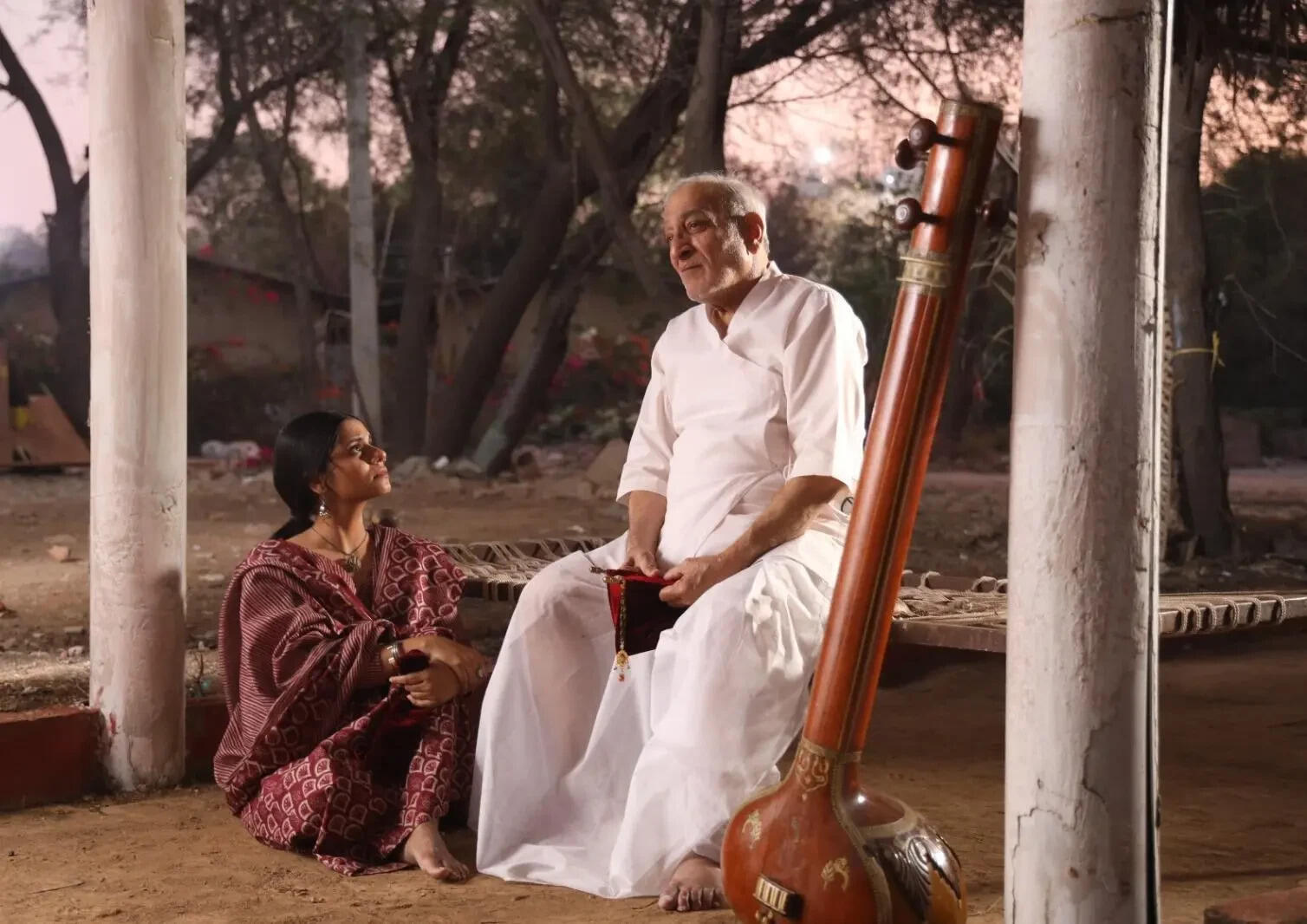
That’s why people like them are called institutions. They have such a vast body of experience that simply talking to them gives you clarity. You just watch Mohan Agashe sir act and you’ll understand everything. He is a brilliant powerhouse of acting. Looking at him, you feel there are miles to go before you can even reach a speck of what he has achieved.
Growing up, was your father a strict parent or more of a quiet observer?
My father was very neutral. He was quite strict with my siblings, but I was born almost 10 or 11 years after them, so things were different with me.People assume I must have been pampered. Maybe a little as a child, but not excessively. He has always been very collaborative with me.I believe parents are only as old as their children. Before children are born, they’re just husband and wife. So when you’re 20, they’re also 20-year-old parents in that sense — they’re learning too.By the time I was born, my father was around 55 and my mother was almost 40, so they had already matured a lot. As I grew older, especially in my early 20s, I became more of a collaborator with them. They would ask for my suggestions and opinions.I really bow down to my father for being so flexible. Even after crossing 70, he could have become rigid or adamant, but he remained open-minded and collaborative. He would ask me, “Do you think we can do this show? Can we make this happen together?”So honestly, he became more of my co-actor than just a father because I’ve shared stage space with him for 15 years. We’ve done so many shows together. After my teenage years, he stopped being just “father-father” and became my co-actor.Even our fights are about theatre, organisation, economics of productions — that’s our animosity and also our friendship.Now I’m also the sole caretaker for both my parents because they’re ageing. So the relationship has evolved even more. I’ve become the parent in many ways now.
Maybe he started believing in you more over the years?
Yes, absolutely. Earlier, when he advised me not to completely depend on acting, it came from practicality. He always said I should have a backup because we’ve seen struggle very closely as a family. We’ve seen terrible days and very good days too.Earlier, I never fully called myself an actor because I wasn’t giving myself entirely to it. I only thought of myself as a theatre worker or theatre-maker, and proudly so.But when I finally started believing that I could actually do screen acting and truly wanted to pursue it, when I started telling myself, “I am 100% an actor. I have 15 years of training, what else will I be after all this?” — that’s when he also started believing in me more deeply.The moment I showed belief in myself, he supported it with even greater confidence. Whenever I felt weak or uncertain, he stepped in and reassured me. So I think I had to take the first step for him to take the next one. Again, it’s a very co-actor relationship between us.
You’ve spoken about your family’s good days and bad days. How did you and your father deal with those phases? What did you learn from them?
In every actor’s household, if there’s work, it’s a good day. If there’s no work, it’s a bad day. When an actor gets work, the whole family becomes happy. Everyone becomes their secretary, assistant, everything. We also function like that.My mother has played a huge role too. Without her support, I don’t think many of us would have survived theatre life.My father has always remained very rooted, even during horrible financial phases. After his theatre accident, we saw extremely difficult times. But he never panicked because he always believed good days would return. I think that comes with experience.I, on the other hand, get very anxious. We’ve seen days where my brother had to take up a call centre job just so we could make ends meet. We are not some flourishing star family. We are very middle class.These experiences taught me that good days and bad days are the most constant feature of this industry. One day you have work, another day you don’t. One day you’re in the news for good reasons, another day for bad reasons.So the best thing to do is not obsess over outcomes. Just keep your head down and continue working. That’s the advice I constantly give myself. Whether it’s a big project or a small project, just work. Don’t keep looking left and right. My father always says: put horse blinders on and keep working.One thing we practice as a family is complete detachment from outcomes. In theatre, sometimes there are barely any ticket sales because there’s a cricket match happening. But even then, legends like Sulabha Arya or Rakesh Bedi always say that even if there is just one person in the audience, we must perform with the same sincerity.I think the same principle applies to screen acting too. Forget the outcome and perform honestly for even that one viewer watching you.
How did you prepare for a character like Taramati in your film?
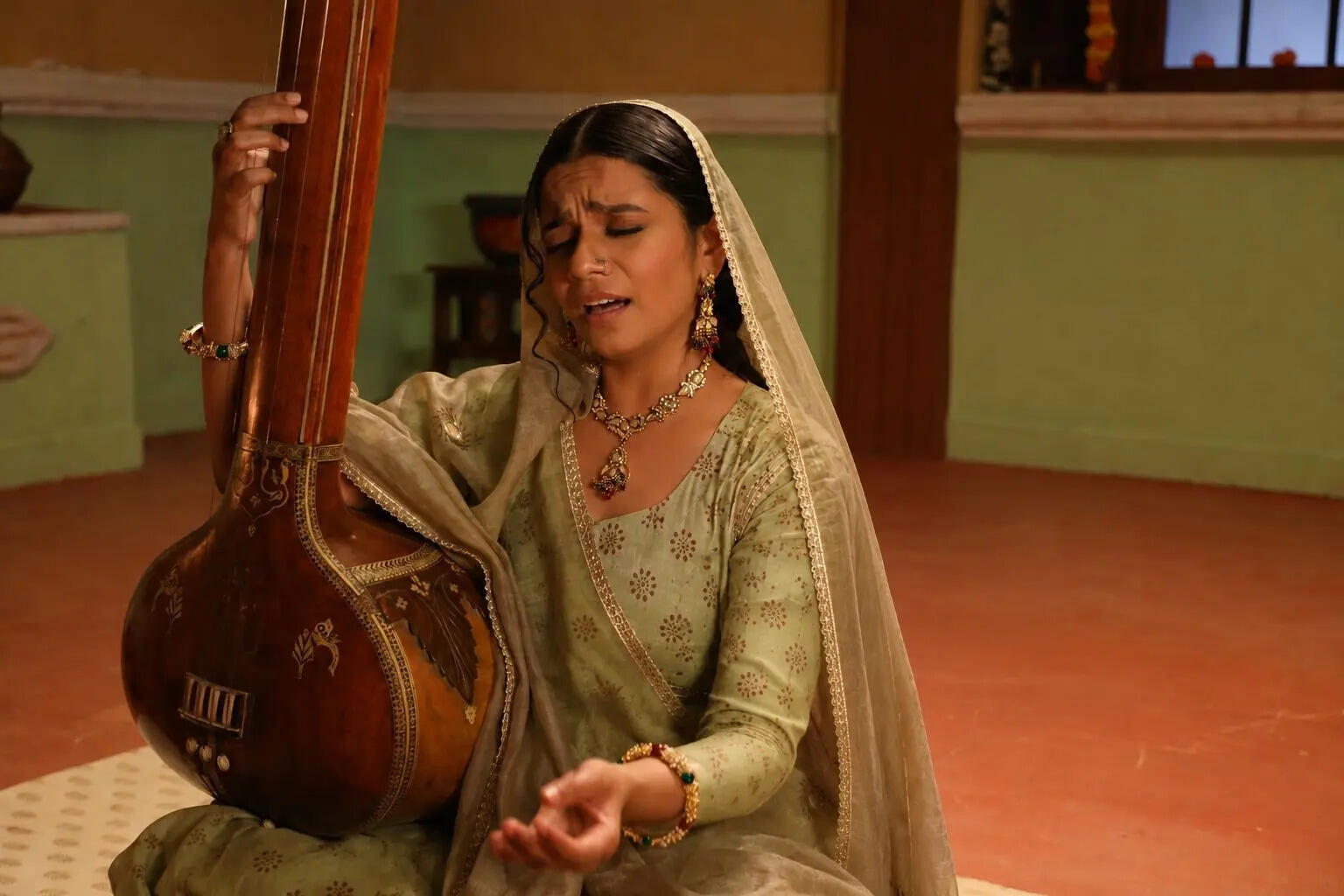
Actually, people don’t know much about Taramati, which is exactly why the film was made. There’s very little information available about her. Some records say Taramati and Premamati were singers, others say dancers. History hasn’t documented them properly.The director, Mohammed Ali Baig, has always focused on woman-centric theatre and wanted to preserve Hyderabad’s theatre culture through this story.I personally had very little time to prepare. So I completely depended on the director and writer because they knew the world they had created. My only focus was getting the emotions right.The one thing common between people from centuries ago and us today is emotion. That was my anchor — the thought and feeling behind every line.With just four or five days, what more could I really do? Of course, I had been preparing during auditions too, but even that was limited.The production itself had budget constraints because they were shooting at heritage and government locations with limited permissions and time. So considering everything, my only responsibility was understanding the emotional subtext behind the lines.Costumes, look, sets — all of that was the team’s department. They transformed ordinary rooms into beautiful period spaces with very limited resources, and I was honestly shocked seeing their precision.The most difficult part was the Hyderabadi Urdu dialect because it’s very different from standard Urdu. Luckily, dubbing helped us perfect it later.So my preparation was entirely focused on my walk, my emotions, my lines, and the subtext. The rest was their expertise. I simply approached it like theatre, just as the director advised me to.
You’re also doing an OTT project now, right?
Yes, coincidentally my first OTT project also happened around the same time. It’s called Pyramid Scheme.The funny part is that the director had come to watch a play in which my father and I were performing. He saw me there and later approached me for an audition.I can’t reveal too much because of NDA restrictions, but it’s a project by The Viral Fever for Amazon Prime Video. It’s my first OTT project and, interestingly, it also features my father.It’s a small part, but it became our first screen project together.
How was it sharing screen space with your father as both a daughter and an actor?
Honestly, I had already experienced that for 15 years on stage. We’ve always been co-actors first.But yes, seeing both of us share screen space made my parents extremely happy. It felt like another milestone achieved.When I finally got locked after multiple rounds of auditions, we were so elated that I can’t even explain it in words. Both of us discussing our call times, preparing together for the set — it was a beautiful feeling.It was different because it was a new medium, but emotionally it felt very familiar because we had already lived that experience together on stage for years.
You also mentioned sharing the stage with Rakesh Bedi. And now after Dhurandar, he has gone viral everywhere, with brands and media talking about him. How does it feel seeing someone from theatre reach that position?
I think it is well deserved. In fact, I feel he should have gotten it much earlier too. Someone from stage deserves that recognition. But I also think there is a misconception that theatre actors do stage only to become famous on screen. That’s not true.He is a powerhouse performer, and we all feel very happy because this is our IPTA family. Indian People’s Theatre Association has people like Rakesh Bedi, Sulabha Arya, Akhilendra Mishra, and many others whom I’ve been watching since childhood.I genuinely feel we would not be even half of what we are if we had not seen them perform. A lot of acting is observation. Watching their rehearsals, which we were allowed to sit through, taught us so much.I feel all these stage actors deserve bigger opportunities on screen. The only reason I say that is because screen reaches a much wider audience, whereas theatre reaches a limited audience at one time. People who cannot come to theatre should still get to witness what brilliant actors these people are.I spoke earlier about Mohan Agashe — I exchanged just one line with him and I was blown away. These are people with immense substance and experience.
Growing up around all these legends, what was that experience like?
It was beautiful. I lived with that little cherry on the cake all the time.The most common reaction I would see from people — whether police officers or ordinary people — was deep respect, because they had grown up watching them. That is much more beautiful than blank stardom. There’s a difference between someone saying, “Oh my God, I saw you on TV,” and someone saying, “I grew up watching you.”I hear that kind of respect for Rakesh Bedi, for Anjanji, for Sulabha Arya and so many others. These people were part of Nukkad and theatre culture.Because of them, I also got opportunities to interact with people like Kundan Shah and even show him a documentary I had directed at one point.All of them are deeply rooted people. They value respect more than fame. And honestly, that makes me worry sometimes whether I will ever be able to reach that level, because it is a very difficult place to reach.
Do you feel pressure about taking forward that legacy?
Honestly, I don’t think I can “take forward” their legacy. I can only work alongside it and try to do justice to it.They created their own place in a very different era and under very different circumstances. I don’t know if I can match that. I will just try my level best and give everything I have. That’s all I know.I definitely feel pressure to earn that kind of respect. Being respected is much harder than just becoming famous. It requires immense grit and determination, and I’ve seen these actors work through sickness, through difficult conditions, through everything.Sometimes I genuinely feel they are made of different material. All of them.The pressure I feel is not about fame or getting work. Even if I continue doing stage, I wonder whether I can ever become even half as good an actor as they are. Can I stand in front of them on stage and justify my presence there? That pressure is always there.
What is one life lesson that has stayed with you while working with all these stalwarts?
They never, ever give up.And I specifically mean theatre actors. They are always willing to fall down and get back up again. I have never seen them give up, and I have never seen them stay disappointed.All of them are kind enough to give advice whenever I need it, but the biggest lesson is that giving up simply does not exist in their dictionary. That kind of mental strength comes because they are all self-made.Even today, if I am in doubt, I can take my script to my father and ask him. But he did not have anyone to go to. He didn’t come from FTII or NSD or any formal institution. He built himself entirely on his own. That makes him mentally very strong. His confidence is unshakable.That is the lesson I take from them — if you are doing your work honestly and genuinely, there is no reason to stop.
What does the road ahead look like for you now?
I don’t completely know yet. But I definitely know theatre will always remain a part of my life.Right now, I’m working as a joint section chief director, so I know I will continue making plays, directing them, acting in them, and collaborating with younger directors as well, which I’ve already started doing.As far as screen work is concerned, I just hope I get more opportunities. I’m not going to give up — that’s the biggest lesson I’ve learned.Whether the goals are big or small, I want more chances to practice this craft in this medium now. I spent 15 years working before reaching here, and now I want the chance to become 15 years old on screen too.