

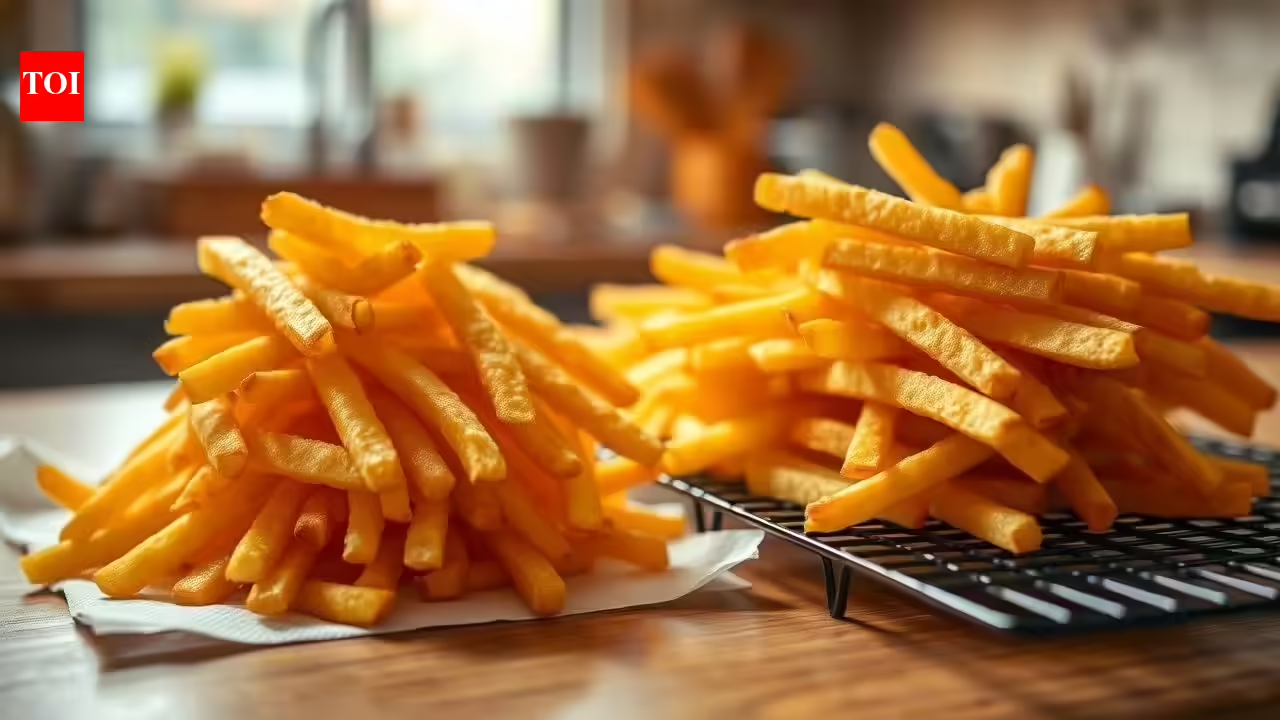
There is nothing more disappointing than ruining a perfectly fried piece of chicken or a fritter with an oil film that develops below it when taken from the pan. It has happened to us all – we got the temperature just right, only to have our food become wet and greasy, turning our favourite delicacy into a laborious experience. The traditional way to address the problem was to transfer our fried items onto a plate covered in paper towels. This may seem logical, but it leads to a wet environment where no crispness can survive.However, the key to achieving the perfect restaurant-style crispy exterior lies not so much in the technique of frying but in what you do with the hot dish right after taking it off the stove. Simply switch from flat plates to an easy wire rack. This change in your kitchen routine will make it possible for the food to breathe freely, thus giving the dish an extra crunchy texture.What is surprising about cooling?It may come as a surprise, but only a small portion of the oil contained in fried products is absorbed during cooking when the dish is heated to boiling temperature in a fryer. The main process of absorption occurs at the stage of cooling. When the food is removed from hot oil, there is a decrease in the temperature of the outer layer of the product, which leads to a reduction in pressure in the crust. This creates a kind of vacuum, as a result of which the surface oil penetrates deeply into the pores.Modelling Oil Absorption During Post-Frying Cooling research describes the role of the porous nature of the fried surface as being the primary path for oil diffusion. The research proves that the treatment immediately after the food items are fried is when it matters most in determining the fat content in the food. The use of a cooling rack ensures no contact is made between the food and the residual oil, meaning the fat retained on the surface comes from an already greasy paper towel.It is important how the food is positioned. In the article on oil separation during deep-frying published by Food and Bioproducts Processing, it is found that when positioning the food in a vertical position or even tilting it, the oil is separated into small droplets rather than creating a thin film on the food. This way, using a rack allows gravity to draw those droplets away from the crust before penetrating the food layer, which significantly decreases the amount of oil absorbed compared to a horizontal position.
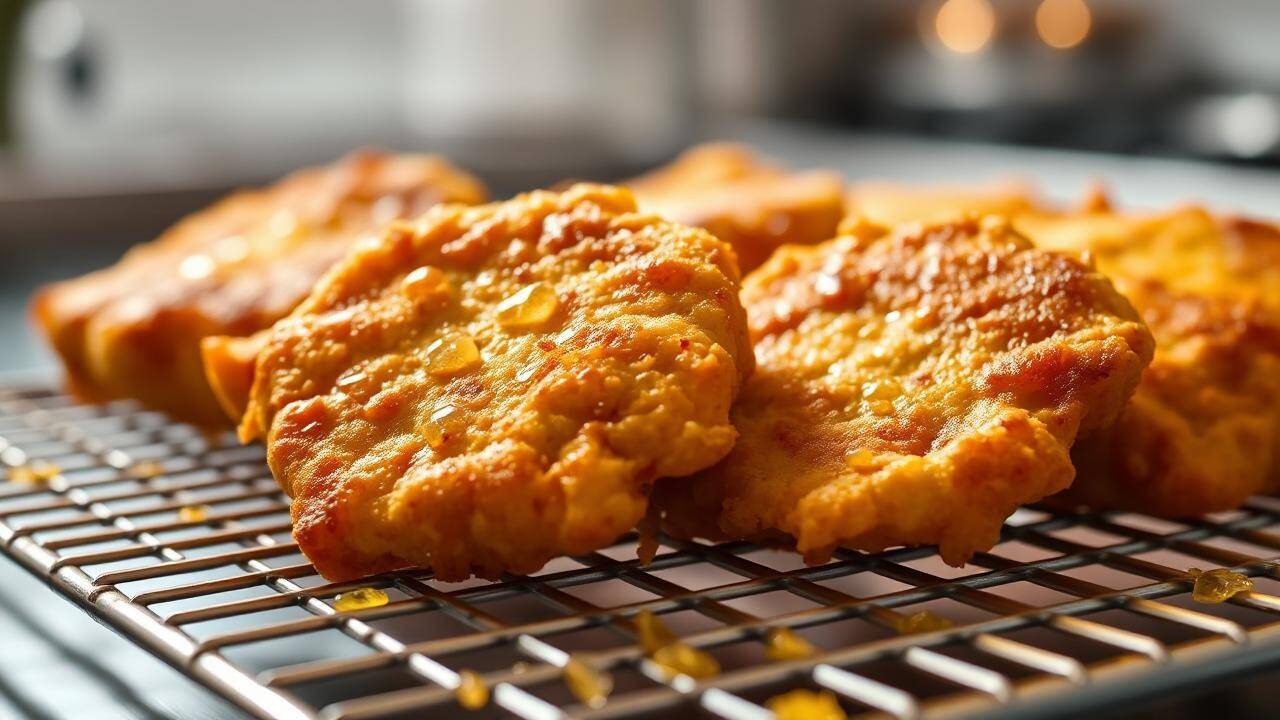
Research indicates that most oil absorption happens during cooling, and a rack facilitates better air circulation and oil separation, leading to improved texture and health benefits.
Improved texture, improved healthIn addition to that crispy crackling sound that comes from a well-cooked crust, reducing the amount of oil in the food also improves your health significantly. The presence of excess oil in cooked food leads to higher concentrations of compounds resulting from the Maillard reaction. They produce the desirable texture and flavour, but their presence in excessive amounts can affect your health adversely.The use of the rack saves you from the infamous steam room experience. Placing your hot food on a flat surface causes the heat stored below to condense into steam, making your crispy coating turn soggy instantly. The use of the wire rack allows for ventilation of steam from all sides simultaneously, thus keeping the crust crisp.To achieve optimal results while frying at home, position a rack above the cookie sheet for maximum drip management. Make sure that the pieces of fried food are in one layer without touching each other so as to ensure that air circulates around all of them equally. You may still be using paper towels to help absorb the excess oil, although in this case, the paper towels will be placed below the rack on the cookie sheet rather than directly under the food pieces. This is a very basic improvement which makes your cooking resemble that of professional cooks.