



Parenting together sounds simple in theory: two adults, one child, one shared mission. In real life, it is rarely that neat. One parent may lean strict while the other is soft. One may believe in structure and routines, while the other trusts instinct and flexibility. One wants consequences. The other wants conversation. And somewhere between the snack requests, school runs and bedtime battles, the same question keeps returning: how do two people stay united when they do not naturally parent the same way? The answer is not to erase the differences. It is to manage them with enough respect that the child does not feel caught in the middle. Healthy co-parenting is not about becoming identical. It is about building a working alliance strong enough to hold different temperaments, different histories and different ideas of what “good parenting” looks like. Scroll down to read more…
Start with the shared goal, not the disagreement
26 May 2026 | 14:25
What’s the one parenting advice you completely disagree with?
When parents clash, the argument usually begins with the method. But beneath that, there is almost always a shared desire: both people want the child to be safe, loved, disciplined, confident or emotionally healthy. That common ground matters. Instead of opening a conversation with “You are too strict” or “You are too soft,” begin with the outcome you both want. For example: “We both want our child to listen without fear,” or “We both want them to grow up respectful and secure.” This shifts the discussion away from personalities and toward purpose. It becomes harder to turn the moment into a battle when both adults can see they are trying to reach the same destination through different roads. That does not make every difference disappear. But it creates a calmer frame for working through them.
Pick your battles before the battle picks you

Not every difference in style deserves a full-scale debate. Some disagreements are about real values. Others are just about preference, habit or the way each parent was raised. A child benefits from consistency, but a family does not need rigid uniformity on every issue. It helps to sort conflicts into two categories. First are the non-negotiables: safety, respect, school attendance, screen limits, bedtime, violence, lying, major discipline decisions. These are the things that need alignment. Then there are the smaller matters: how long a child takes to get dressed, whether one parent is more playful, and whether one is more lenient about dessert. Those differences can often be tolerated without turning them into a referendum on your competence as a parent. The more every small disagreement is treated like a crisis, the more tense the home becomes. Mature parenting means learning where to stand firm and where to let another adult be different without seeing it as sabotage.
Do not correct each other in front of the child
Few things weaken a parenting partnership faster than public undermining. When one parent openly contradicts the other in front of the child, the child immediately learns that adults are not aligned and can be played against one another. Even if the correction is justified, the timing can do damage. If your partner says no and you disagree, the safer move is to support the boundary in the moment and revisit the issue later in private. You can tell your child, “We will talk about it together,” or “Your other parent and I will decide.” That simple response protects the child from being pulled into a loyalty test.
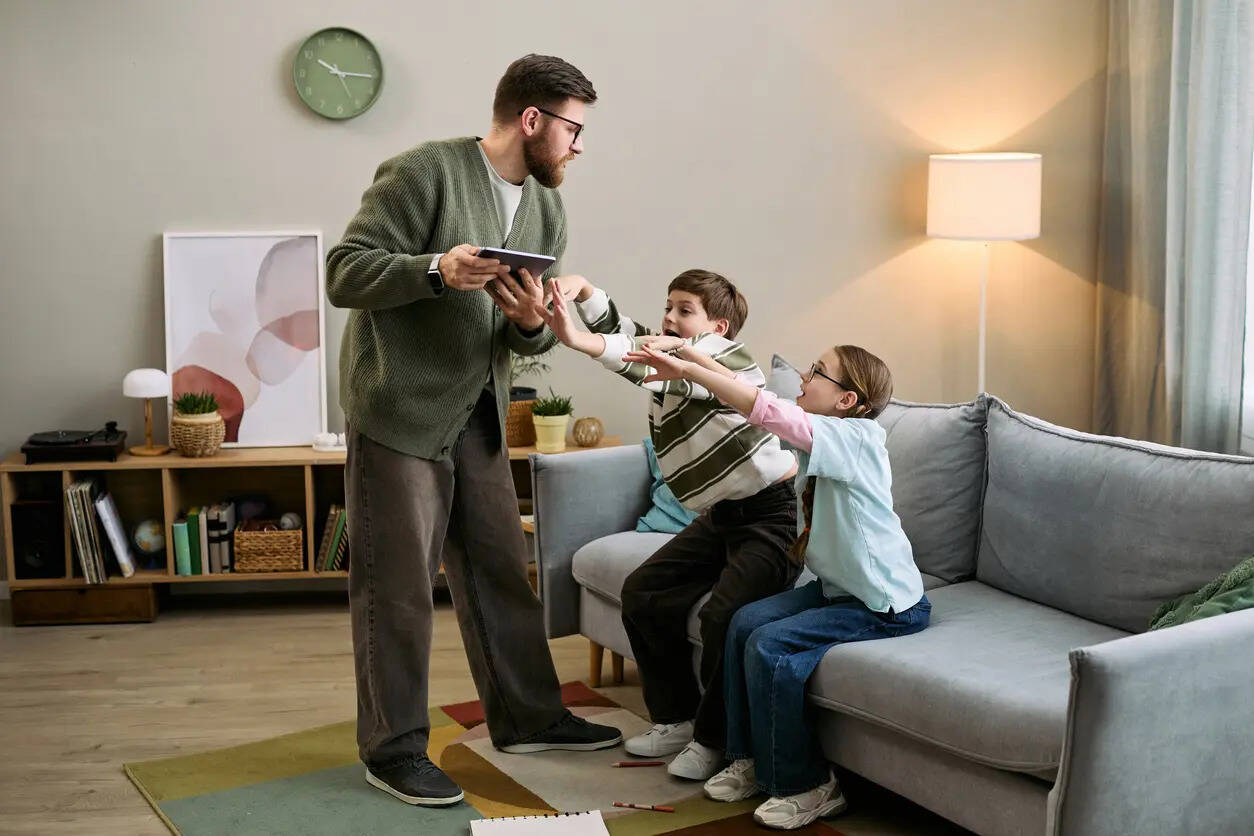
Children do not need to watch their parents win arguments. They need to see them handle conflict without turning the home into a courtroom. A united front does not mean blind agreement. It means disagreements are processed away from the child’s ears, not performed for them.Divide roles according to strengthsClashing styles do not always have to be a problem. Sometimes they can become an advantage. One parent may be naturally better at structure and follow-through. The other may be better at emotional soothing or creative play. One may be calm in a crisis. The other may be better at noticing subtle changes in behavior. A strong parenting team learns how to use those differences instead of resenting them.This does not mean one parent becomes the “strict one” forever and the other becomes the “fun one” permanently. But it does mean each adult can contribute from their strengths while respecting the limits of the other. Families become more stable when adults stop competing for the same role and start building a system that uses both temperaments well. Children often benefit from this balance. They learn that care can look different in different hands, and that consistency does not have to mean sameness.
Make room for repair after conflict

Every parenting pair will disagree. The goal is not a perfect partnership. The goal is a repairable one. Repair begins when both adults can return to the issue without defensiveness. That may sound like: “I was too harsh earlier,” or “I should not have corrected you in front of her,” or “I understand why you reacted that way.” These are not signs of weakness. They are signs of a relationship strong enough to recover.Children watch how adults handle rupture. When they see parents apologize, recalibrate and keep going, they learn that conflict does not have to end in distance. They learn that love is not fragile enough to break every time two people disagree. Repair also gives the child something more subtle but powerful: emotional safety. It shows them that the adults in charge can make mistakes without becoming unsafe.
Remember that consistency matters more than perfection
No child needs two identical parents. What they need is a home that feels predictable enough to trust. They need to know the rules will not shift wildly from one parent to the other. They need to understand that boundaries exist, even if the tone differs. And they need to feel that the adults are talking to each other, not through them. That is why successful co-parenting is less about matching personalities and more about building shared habits: regular check-ins, agreed-upon rules, private problem-solving and a commitment to stay on the same side even when you disagree on the details.Parenting as a team is not always graceful. It is rarely tidy. But it becomes much easier when both adults stop trying to prove that their style is the only correct one and start asking a better question: what will help our child feel secure, respected and loved That is the real work. And when two very different parents can do that together, a family does not just function. It steadies.