


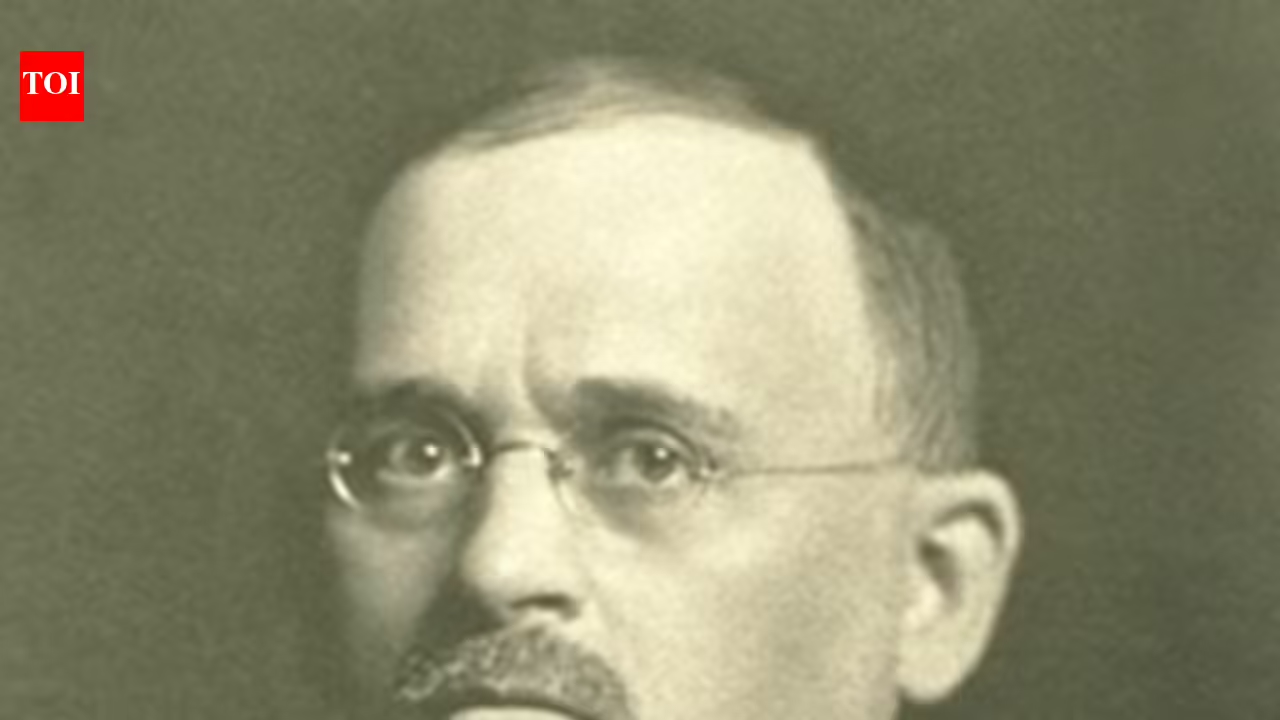
For many of us, we wake up at odd hours of the morning to prepare ourselves breakfast, without ever being aware of the fact that our crunchy cereals owe their existence to an incident of absolute fatigue. It all started in 1894 when Will Keith Kellogg and his brother, Dr John Harvey Kellogg, were overseeing the management of the Battle Creek Sanitarium in Michigan. They were trying to come up with healthy alternatives to food, especially vegetarian food, for their patients. This was not an easy feat and involved much experimentation with grains.When they came back, the wheat had become stale, but money was tight for the brothers, so they decided to try to make something out of it anyway. After passing the tempered grains through metal rollers, the brothers expected long ribbons of dough to form. However, the stale wheat crumbled into many tiny flakes. Piqued by their creation, the brothers toasted these flakes and served them to their patients at the sanitarium. The feedback was instant, the patients liked the crispy taste, and flaked cereal became the first product of this process.From an experiment in medicine to a pantry staple in the worldWhile the “stale wheat” story is a favourite piece of American folklore, the shift from a kitchen fluke to a food empire was a deliberate and often difficult journey. The setting of the sanitarium is crucial because it was a place where food was viewed as a form of medicine. According to the research paper, John Harvey Kellogg, MD: Health Reformer and Antismoking Crusader, the doctor was obsessed with improving the American diet through “biological living.” He saw these new grain flakes as a way to replace the heavy, greasy breakfasts of the era with something light and digestible.However, the brothers were not in agreement about the future of their discovery. While Dr John Harvey insisted on keeping the flakes healthy and sugar-free, his brother Will envisioned a huge commercial success with his products. As reported in an article at Michigan State University, Will parted ways with his brother in 1906 when he saw that he would have to create the perfect recipe, using corn instead of wheat, and adding some sugar to improve taste in order to make the flakes popular among the masses.
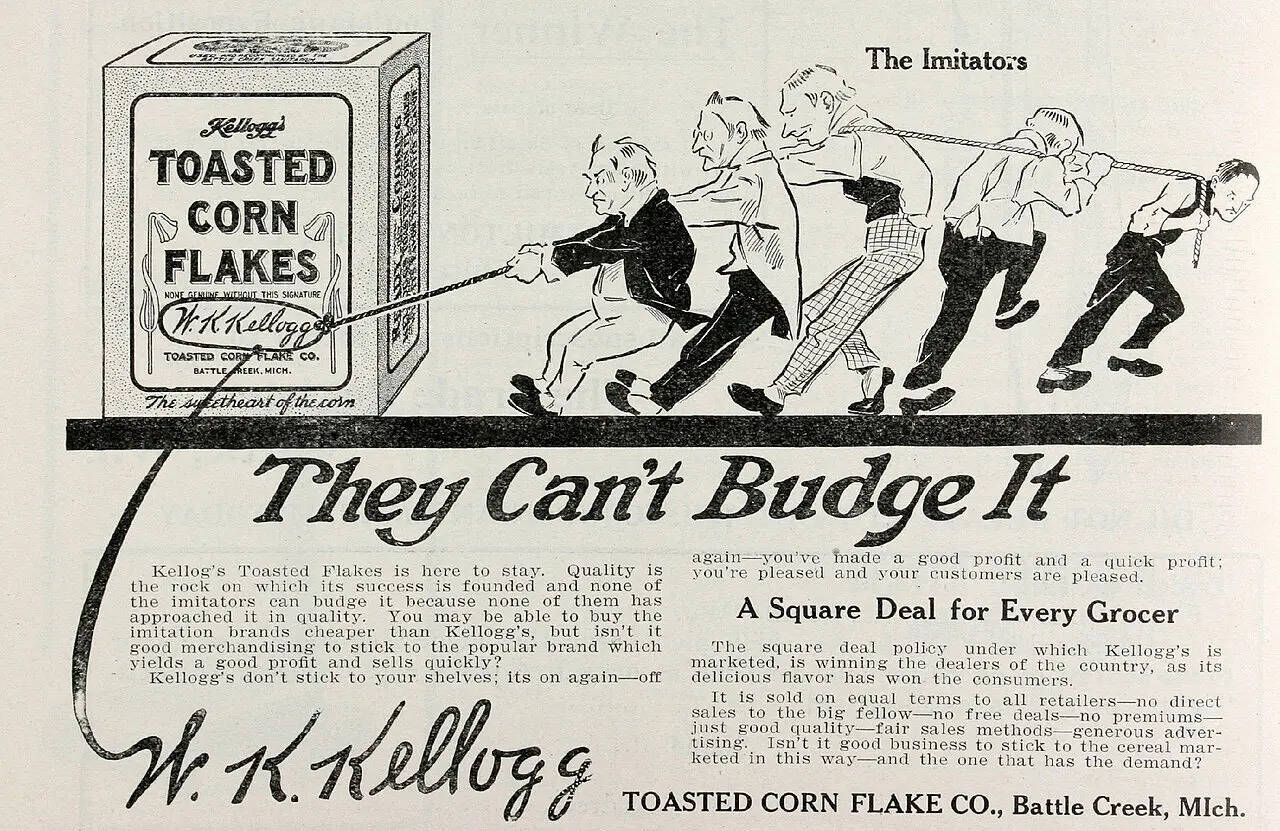
While John Harvey focused on health, Will envisioned commercial success, eventually adding sugar and using corn to launch a global breakfast empire. Image credits: University of Washington, via Wikimedia Commons
The crunchy legacy of a forgotten pot of grainThis step marked the true spark of the Kellogg dynasty. Will Kellogg was ahead of his time as an advertiser and marketer and knew how to persuade people with vivid colours and jingles that the way to start one’s day should be by eating quickly and conveniently. He created an industry out of the health food that was used in a sanatorium – something that could be delivered in a cardboard box all across America.The discovery also triggered a “cereal boom” in Battle Creek, which quickly became known as the Cereal Capital of the World. Dozens of competitors tried to copy the flaking process, but the Kellogg’s brand survived because of Will’s insistence on quality and his massive investment in marketing. Today, the process of toasting and flaking grains remains largely the same as it was in that sanitarium kitchen, proving that some of our most enduring habits are built on the foundations of a simple mistake.Reflecting on this story about the Kellogg brothers teaches us that the “failure” in the kitchen, such as leaving a pot of grains for too long, is only an end if we fail to consider the outcome. This unique combination of medicine reform and bold entrepreneurial spirit turned a failed batch of grains into the most popular breakfast cereal in the world. One can’t help but wonder about other important innovations waiting in the corner of our refrigerators to be discovered.